



La Sportiva announces a new partnership with the historic glacier marathon and becomes the official sponsor of the 25th edition, scheduled for April 17, 2027.
4Outdoor is also on Whatsapp. Just click here to subscribe to the channel and stay up to date.
September 25, 2026 – Arnad (Aosta Valley) – The 25th edition of the Mezzalama Trophy—the historic glacier marathon scheduled for April 17, 2027—was unveiled this morning at the Fort of Machaby. Established in 1933 in memory of Ottorino Mezzalama, a pioneer of the sport, the competition is considered one of the most iconic international ski mountaineering events and is part of the prestigious La Grande Course circuit.
The route runs between Breuil-Cervinia and Gressoney-La-Trinité, crossing the Monte Rosa massif and reaching altitudes of over 4,000 meters, with key passages over Castor and the Lyskamm Nose.
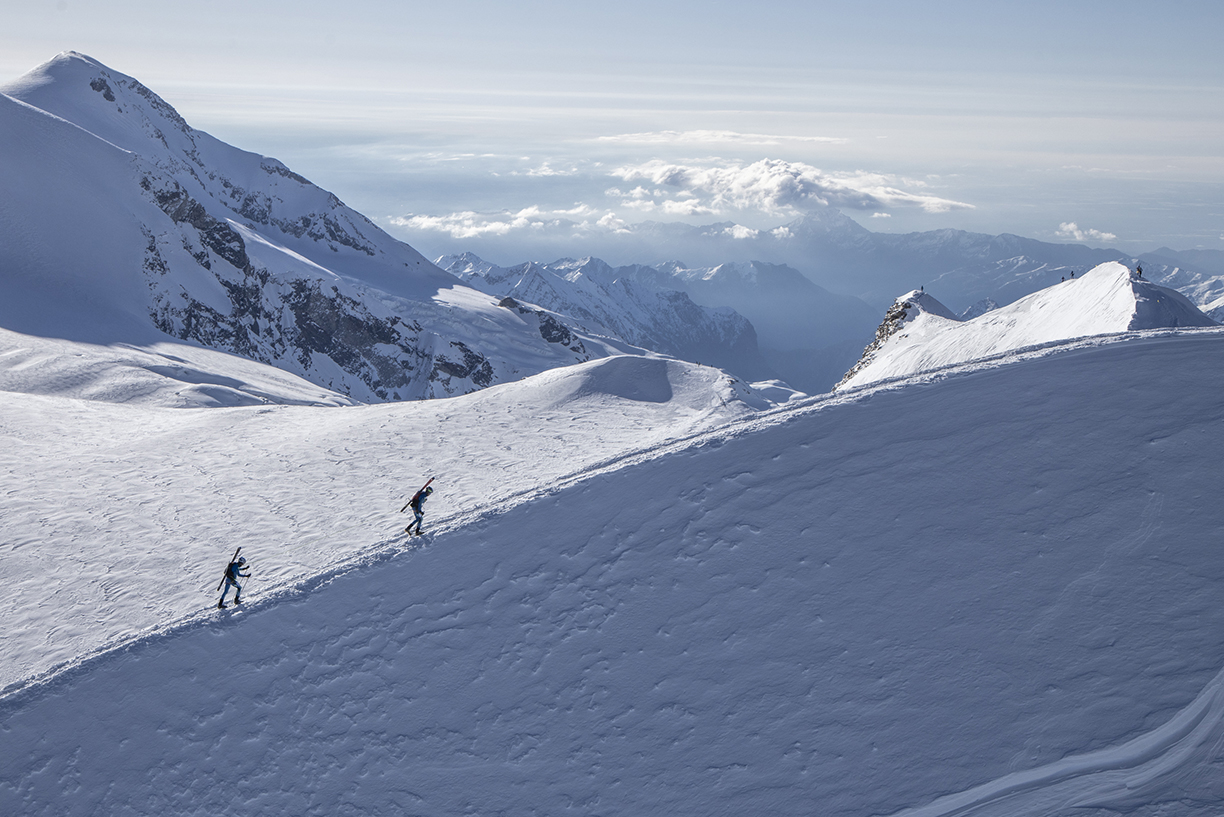
The Mezzalama Trophy: Tradition, Territory, and Safety
The proceedings opened with an address by Alex Brunod, President of the Mezzalama Foundation:
“We are ready to start up again with undiminished enthusiasm at an extraordinary venue like Fort Machaby. Over the years, our goal has been to pair the Mezzalama—which we consider a pinnacle of alpine sport—with other iconic local landmarks, further promoting the image of the Aosta Valley, which we proudly represent. The choice of this venue aligns perfectly with that objective. For this edition, too, we are introducing new features through targeted adjustments that build upon the well-considered decisions made two years ago—decisions that proved effective in enhancing the race’s spectacular nature while ensuring maximum safety for all participants. Today marks the official start of the countdown: the organizational journey is a long one, but the machinery is ready to go.”
Next to speak was Giulio Grosjacques, Regional Minister for Tourism, Sport, and Commerce of the Autonomous Region of Aosta Valley:
Gathering here at Machaby today for the presentation of the 25th edition of the Mezzalama Trophy evokes a sense of emotion, as this historic ski mountaineering race embodies the very essence of our mountains and the sporting tradition of the Aosta Valley. Since 1933, this major competition has epitomized the values of pure mountaineering; the Mezzalama is a sporting challenge undertaken by athletes who view the high mountains with absolute respect and awareness. It is fitting to acknowledge the Mountain Guides, whose work is grounded in these very ideals. Mezzalama athletes tangibly demonstrate how it is possible to tackle a high-mountain course by combining competitive spirit with total harmony with nature.
“With the historic shift in the last edition to teams of two athletes,” continued Councillor Grosjacques, “the race demonstrated its ability to evolve, always prioritizing agility and safety in an alpine environment increasingly affected by climate change. For the 2027 edition, too, this fascinating, historic race is sure to spark enthusiasm among enthusiasts and will undoubtedly draw great interest from a wide audience, who will be able to admire the magnificence of our mountains. I would like to conclude by offering—on behalf of the regional administration and myself—my sincerest congratulations to the Technical Director of the Trofeo Mezzalama, Adriano Favre. He was recently awarded the Silver Plaque of the International Alpine Solidarity Prize, a prestigious honor recognizing the dedication of a great mountain guide to high-altitude rescue operations.”
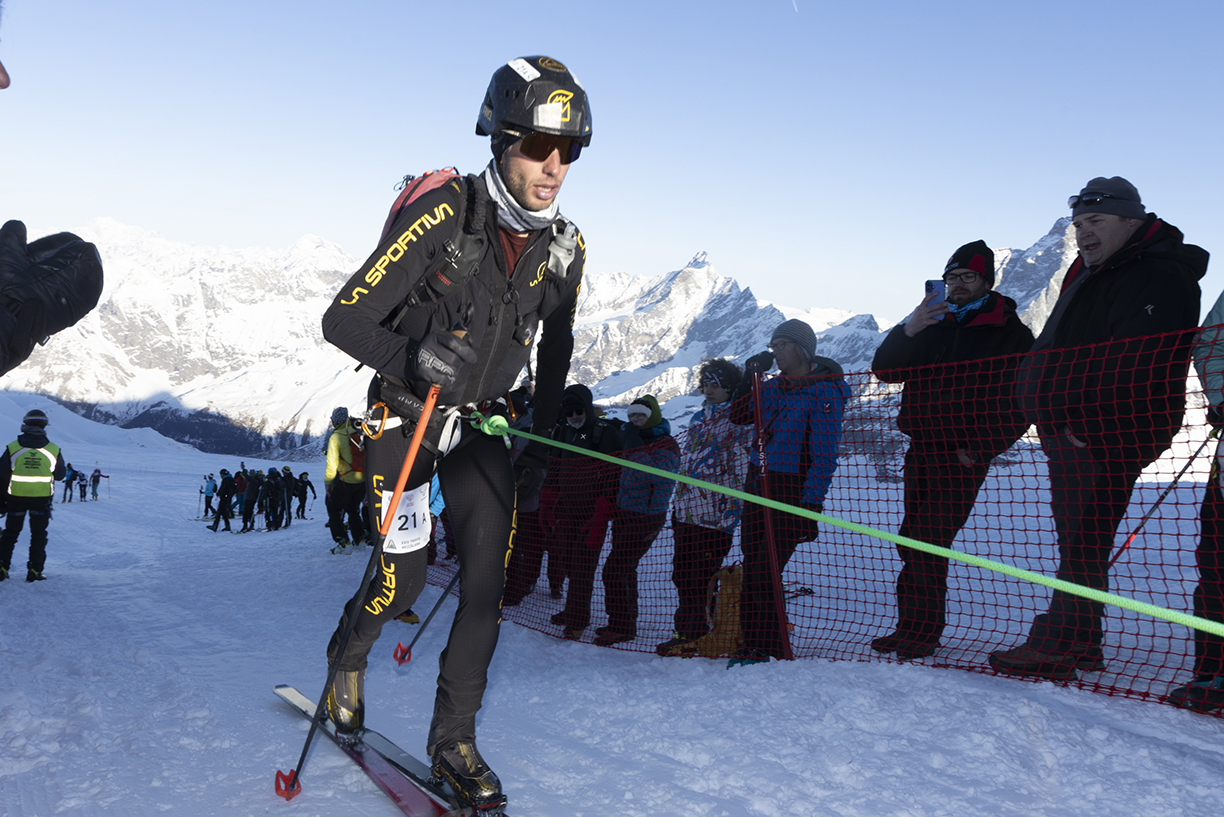
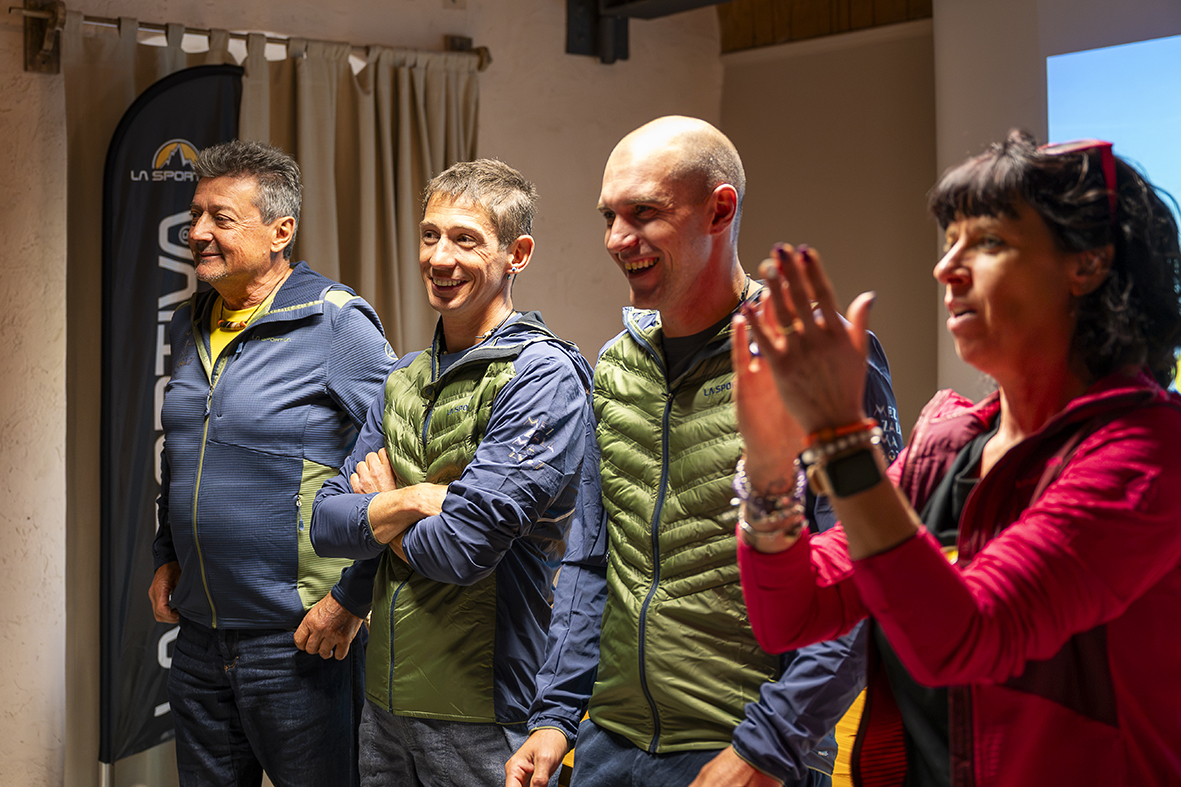
La Sportiva is the official sponsor of the Trofeo Mezzalama.
The conference then turned to the new partnership with La Sportiva, presented by Vittorio Barrasso, the company’s Brand & Communication Corporate Manager:
“For nearly a century, the Trofeo Mezzalama has stood as one of the most authentic and iconic expressions of global ski mountaineering. We are proud to become an official sponsor and join a history that has helped shape and define this discipline. In recent years, La Sportiva has strengthened its presence in the ski mountaineering world through product innovation, athlete support, and an ongoing dialogue with an ever-evolving community. This partnership is a natural progression of that journey, offering us the opportunity to place our experience and deep knowledge of the sport at the service of one of the international scene’s most prestigious events. Together, we aim to contribute to the future growth of ski mountaineering, alongside an event that embodies the authentic spirit of the sport.”
The agreement was sealed with the presentation of the technical top designed for all competitors, unveiled on stage by mountain guide and La Sportiva athlete François Cazzanelli, mountain guide Emrik Favre, and La Sportiva team athlete William Bon Mardion.
Towards the end, Marco Camandona also took the stage—a mountain guide, a climber who has summited all fourteen of the world’s 8,000-meter peaks, and the technical director of the Tour du Rutor—highlighting the event’s value for the development of new generations:
“Competitions of this caliber are also vital for the youth development pipeline, serving as an irreplaceable benchmark for the champions of tomorrow. Within the La Grande Course circuit, we dedicate significant effort and attention to the growth and preparation of the next generation.”
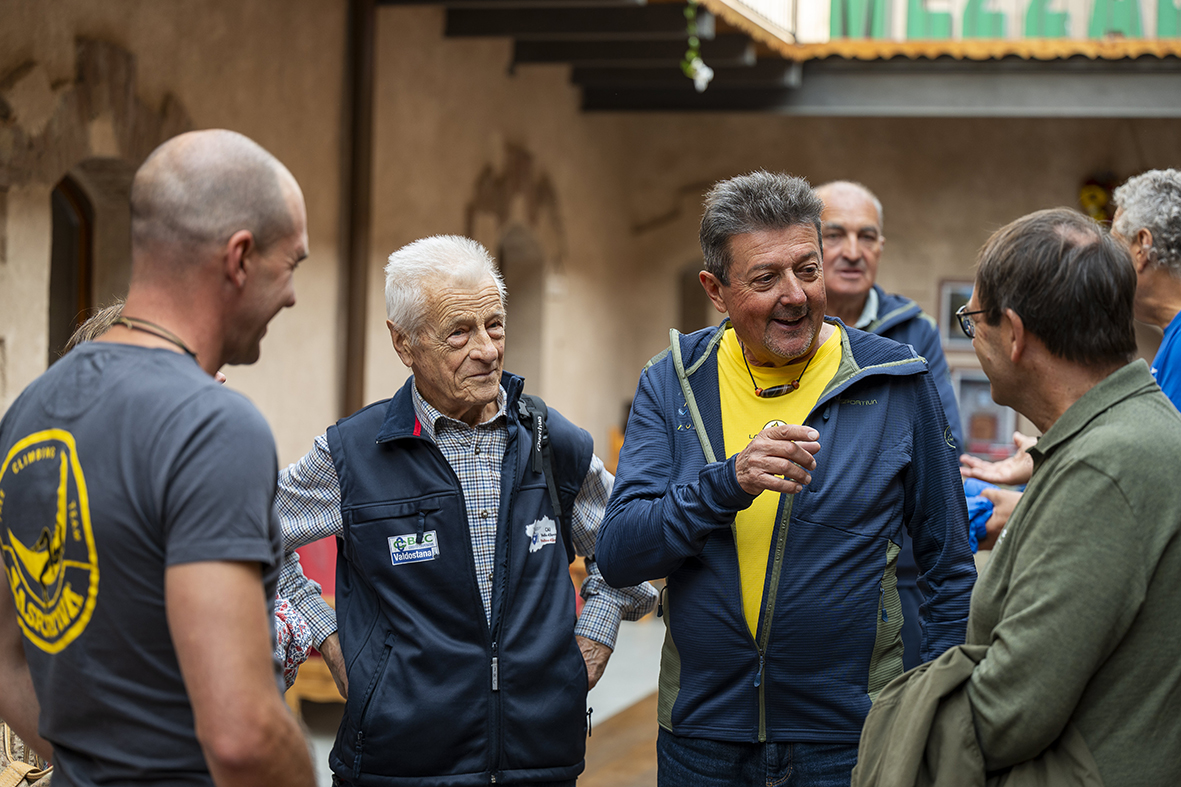
The history of the Mezzalama: between mountaineering and mountain culture
To conclude the press conference, a conversation between Technical Director Adriano Favre and mountaineering historian Pietro Crivellaro explored five key aspects of the race’s identity:
- The origin of the name “Monte Rosa”: an etymological clarification that refutes the interpretation linking it to dawn reflections—a theory proposed by de Saussure and Baron von Welden. Instead, the place name derives from an ancient Aosta Valley Patois term—also found in the names of peaks such as Roisetta or Rosa dei Banchi—used to denote glaciers.
- Safety and international comparison: established in 1933, this “white marathon” set a precedent beyond national borders, inspiring the Swiss Patrouille des Glaciers in 1943. Unlike the latter—which has seen serious tragedies in the past involving crevasses and glacier hazards—the Mezzalama boasts a history free of major accidents, the result of comprehensive safety measures and the pivotal role played by mountain rescue teams.
- The evolution of equipment: the historic shift between the introduction of lightweight cross-country skis in 1936—adopted by Captain Vida’s patrol, which used minimal gear—and the clear regulatory approach introduced with the modern Mezzalama, which has once again placed strictly high-altitude ski-mountaineering equipment at the forefront.
- The evolution of equipment: the historic shift between the introduction of lightweight cross-country skis in 1936—adopted by Captain Vida’s patrol, which used minimal gear—and the clear regulatory approach introduced with the modern Mezzalama, which has once again placed strictly high-altitude ski-mountaineering equipment at the forefront.
- Weather management and the event’s continuity: from the early editions interrupted by the winds of war in 1938, through the 1970s (1971–1978) when the event was hampered by persistent adverse weather, to the modern organizational model that—from 1997 to the present—has successfully managed high-altitude weather volatility, ensuring the staging of 14 consecutive editions and paving the way for the fifteenth edition of the modern era.