




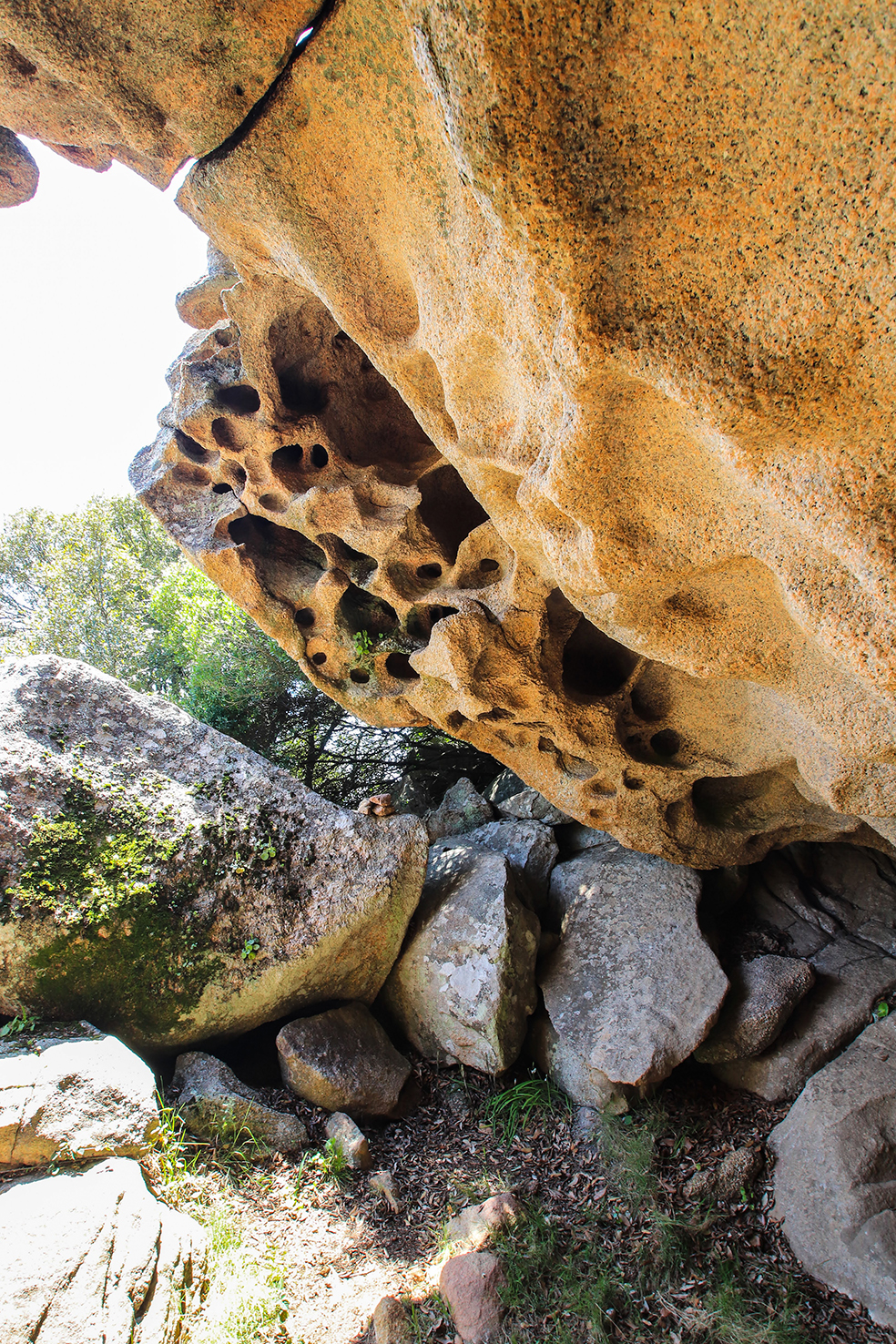
Sardinia reveals two very different souls to climbing enthusiasts. An ancient and solid base of granite, shaped by atmospheric agents through geological eras, and younger, sharp limestone formations, sometimes overlooking the sea. The granite of the north of the island is full of boulders, blocks of stone that require few technical movements and often a lot of strength. However, there is no shortage of large towers with enormous caves and spectacularly shaped tafoni. The limestone instead presents slabs with holes, blades, dihedrals and drop walls, also forming walls that exceed 300 meters in height, especially along the eastern coast.
4Outdoor is also on Whatsapp. Just click here to subscribe to the channel and stay up to date.
Limestone at the Pedralonga spire
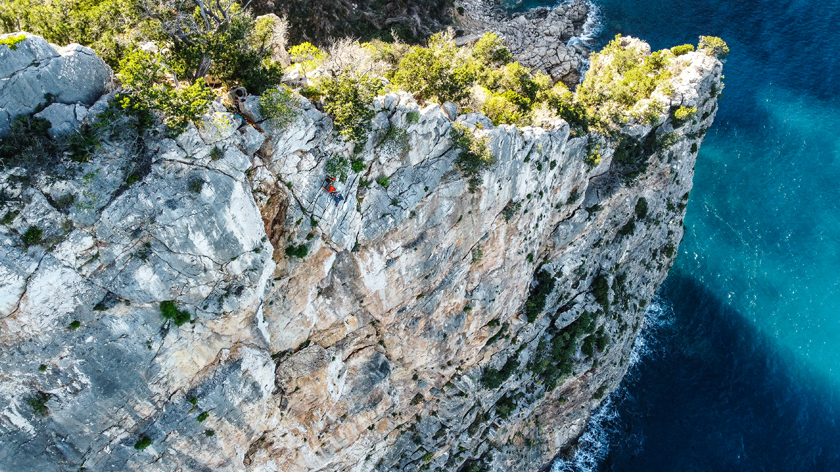
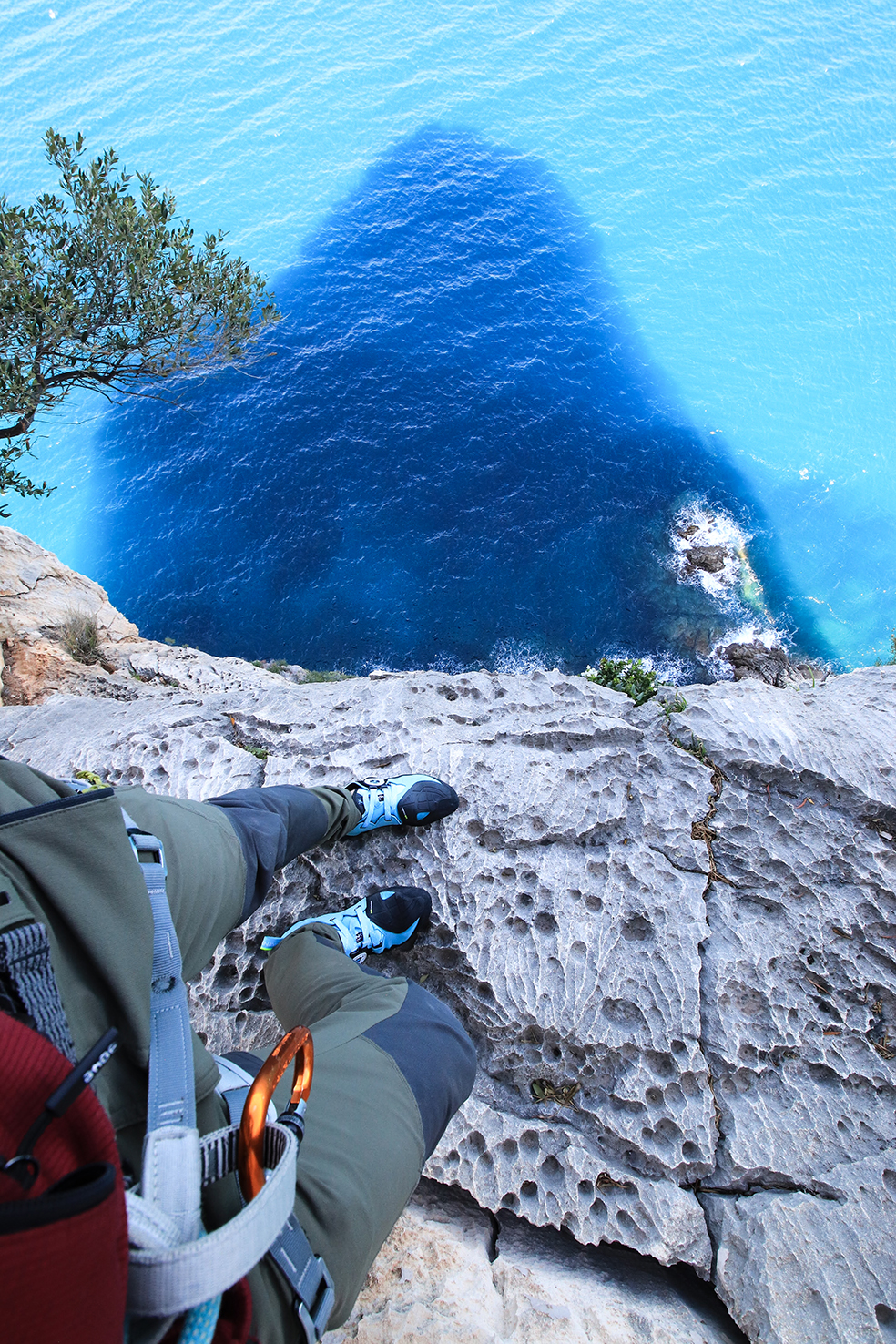
We begin with the youngest rock, the Pedralonga spire, in the famous coastal stretch of the Baunei area. Pedralonga is a 128-meter-high limestone outcrop on which several climbing routes have been established, both single-pitch and multi-pitch. “Marinaio di Foresta” (Forest Sailor) is the evocative name Maurizio Oviglia gave to one of these routes, which he established on the sea-facing face. It’s a slanted line that, starting from the last rock reachable on foot, traverses the cliff overlooking the sea in seven pitches, for a total of approximately 190 meters. The face we’re climbing faces northeast, and we decide to tackle it in the early afternoon. So, as we ascend, the shadow of Pedralonga stretches out into the sea, drawing a clear line on the water separating the deepest, darkest blue from the crystalline turquoise.
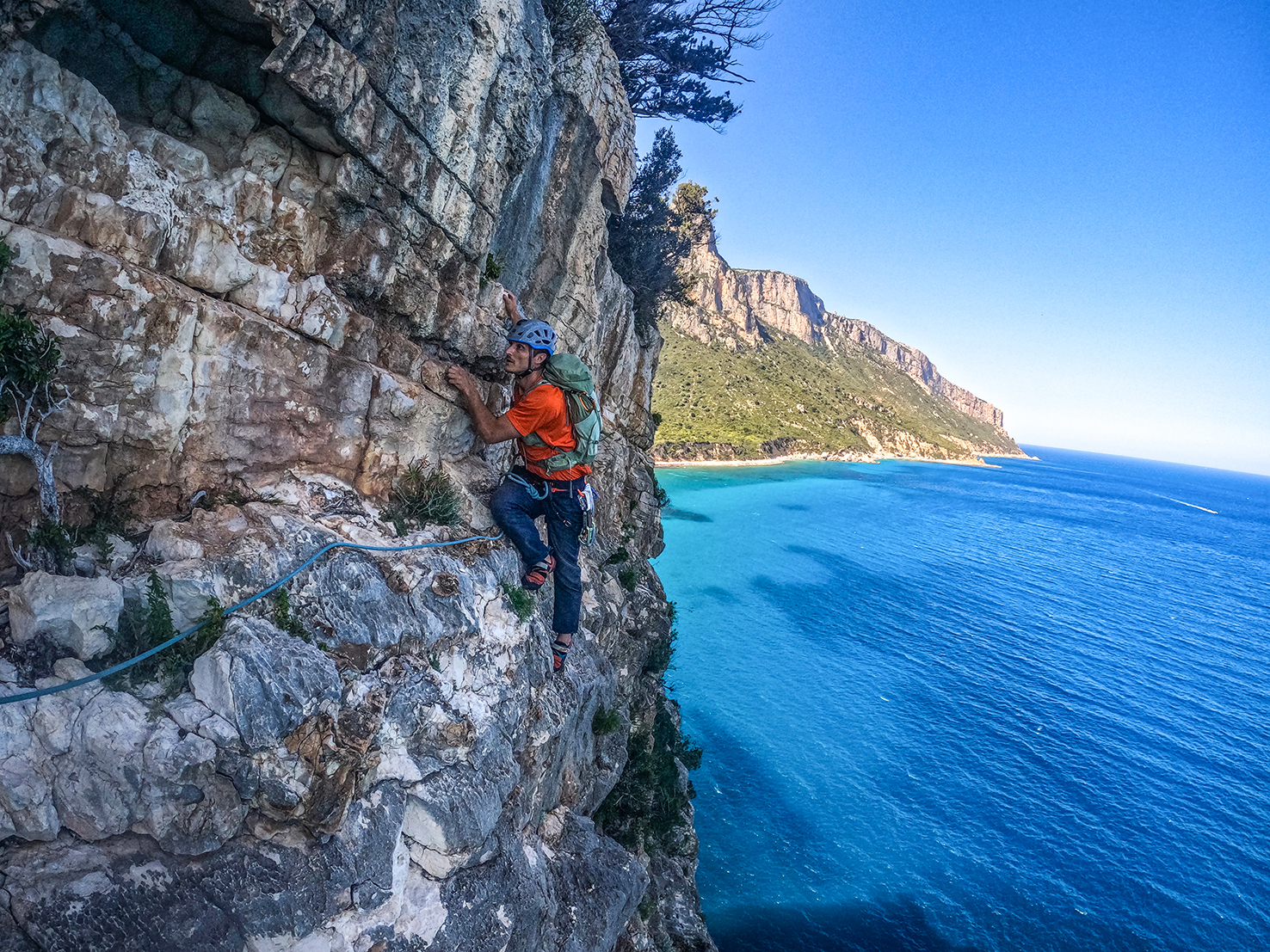
The rock is sharp and aggressive. The blades and pockets offer good handholds and allow for decisive, athletic climbing. Even the wind and sea seem to be exerting their power, as the waves crash powerfully at the base of the rock. In the background rises Punta Giradili, one of the island’s most iconic peaks for climbers, given the beauty and difficulty of the climbing routes. Between the rocks, helichrysum plants emerge here and there, having somehow managed to grow in the crevices, or small junipers bent by the wind.
Granite on Mount Pulchiana
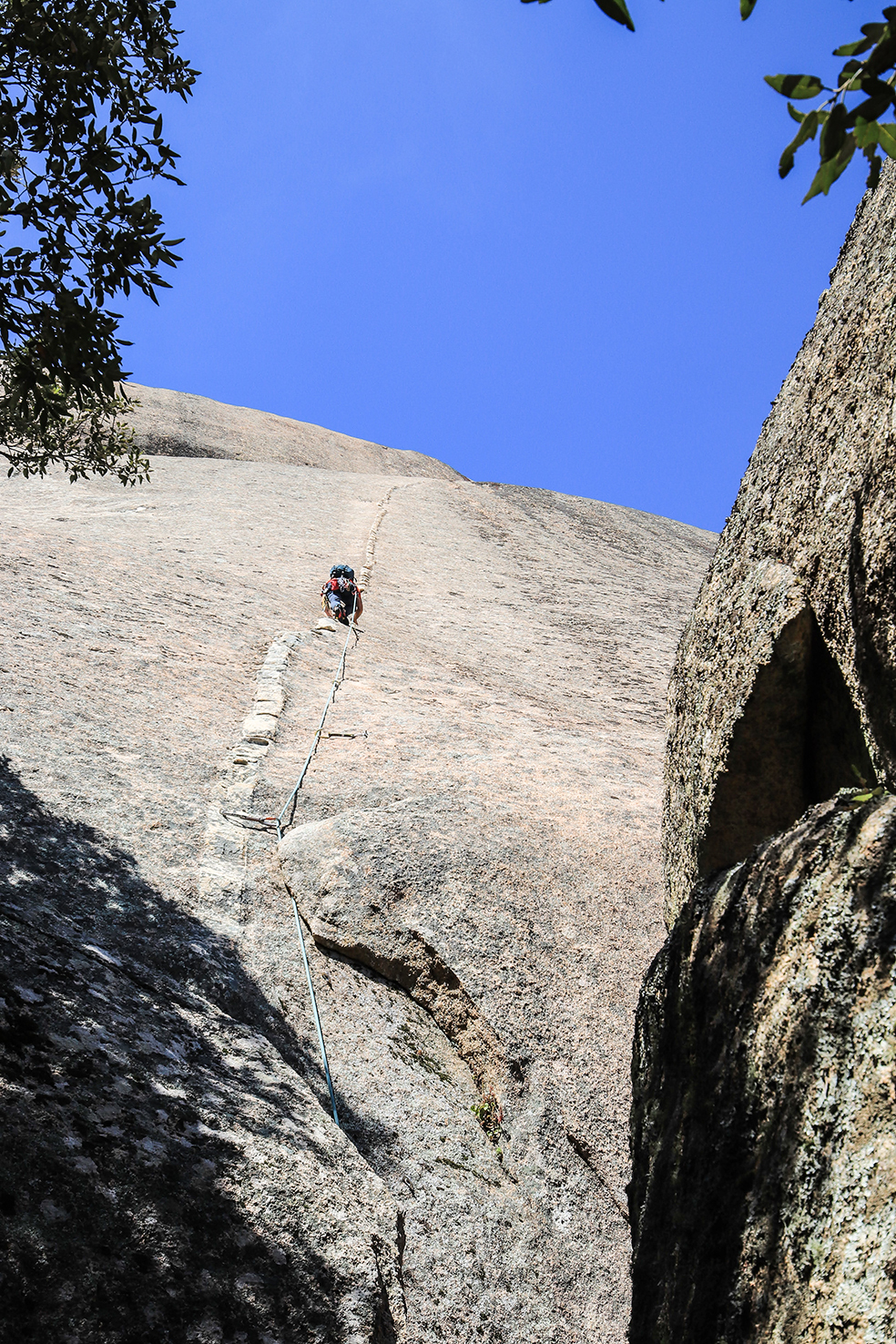
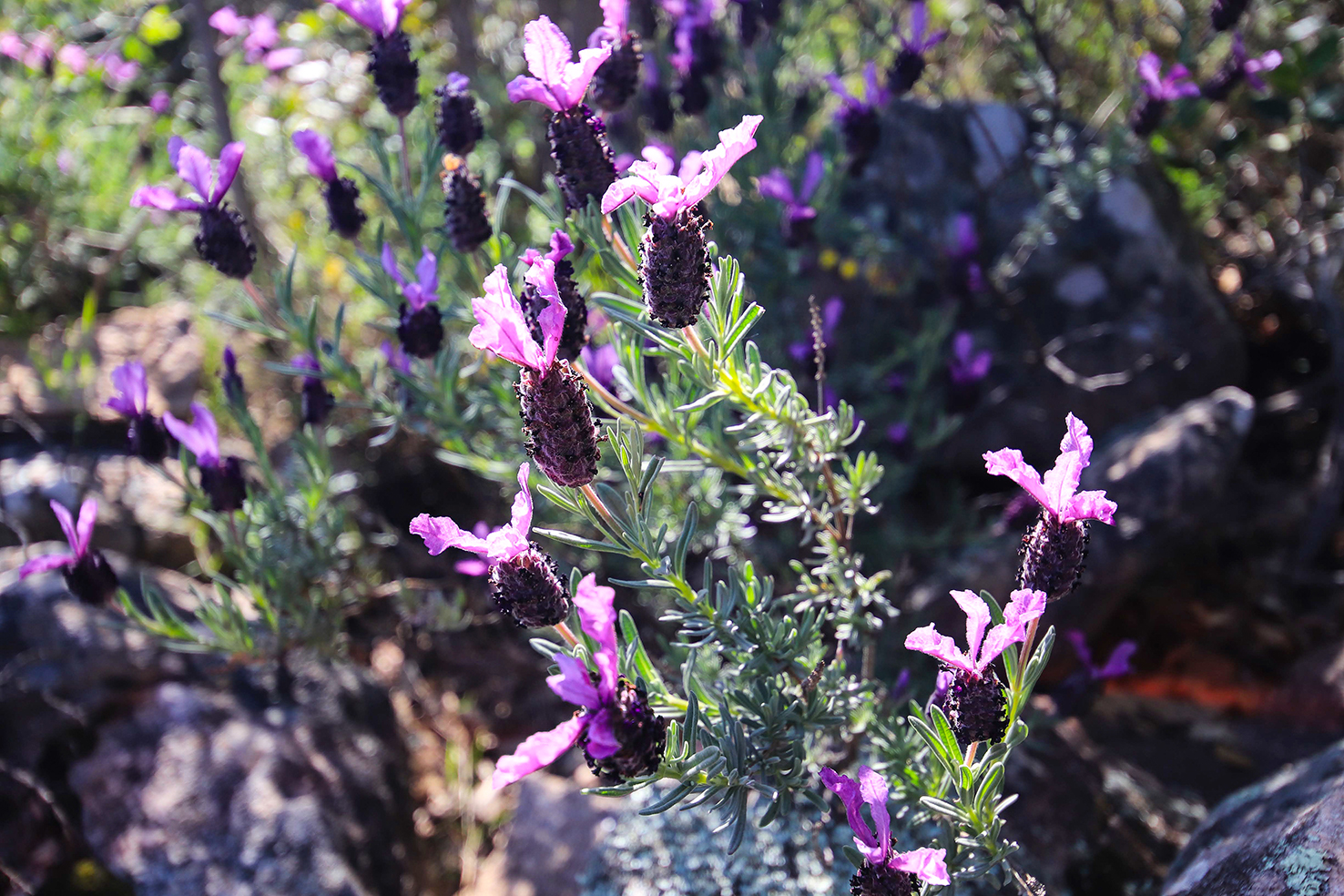
The contrast with our second climb, the one on granite, is stark. We decided to ascend Mount Pulchiana, the largest granite monolith in Sardinia, following one of the very few bolted multi-pitch routes in Gallura. Here, the environment seems to inspire calm, or convey ancient wisdom. Spring on this plateau offers an explosion of colors and scents. We walk toward the mountain along a path that winds through lavender, cistus, broom, and asphodel bushes. The route is called Pocahontas and follows a quartzite vein that climbs vertically up a supported slab of solid granite. A rather rare and unique rock formation, especially considering its length.
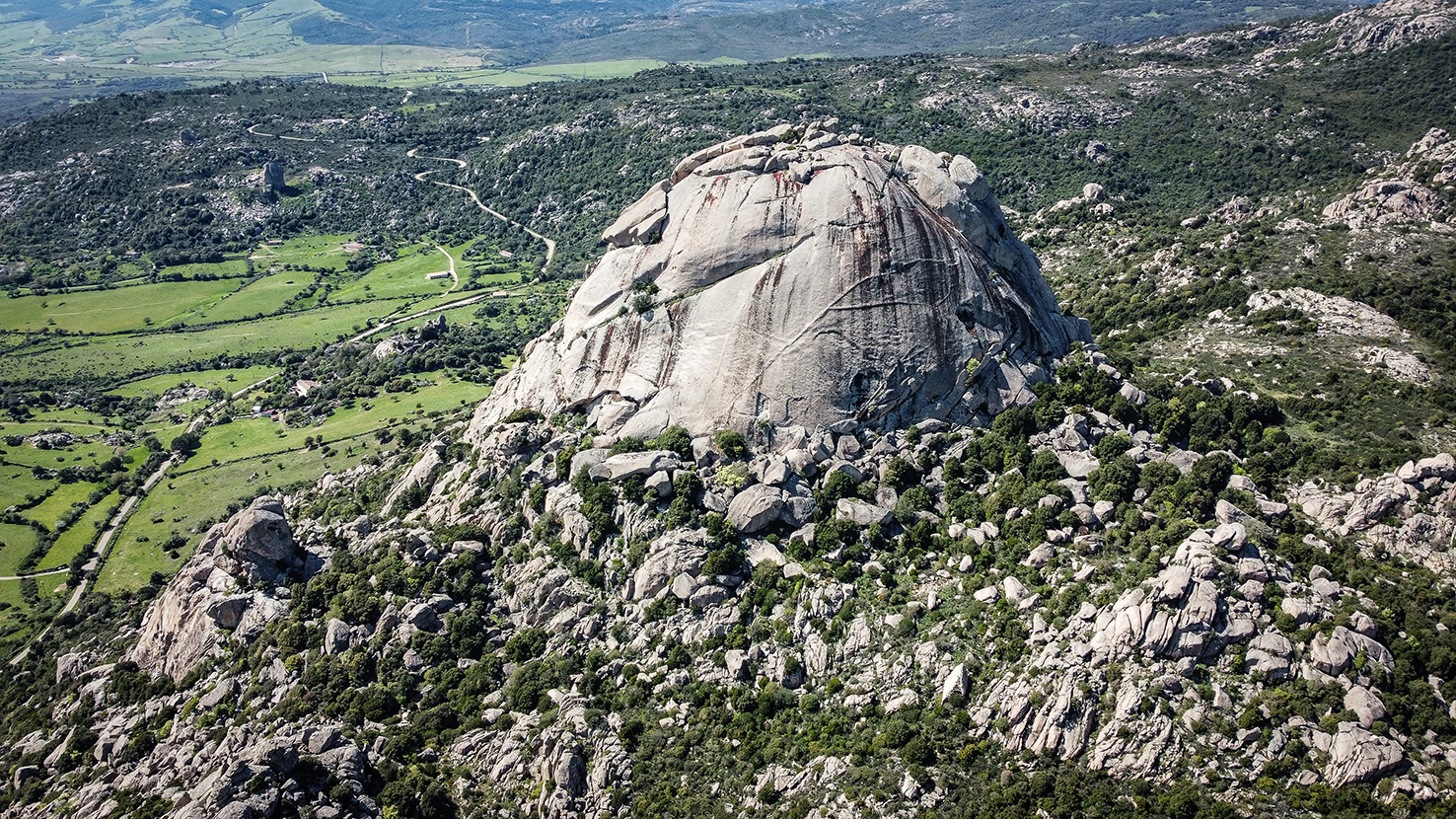
The quartz vein resembles, on a smaller scale, the famous Snake Dike, located on Half Dome in Yosemite National Park. Climbing requires a great deal of footwork, while handholds are almost nonexistent. Balance is essential, and steps, in the most difficult sections, are slow and controlled, as is breathing. We reach the summit and admire the 360-degree view of the surrounding valley. We can even glimpse a stretch of sea in the distance.
It’s the sea itself that unites the two souls of Sardinia in our climbing expeditions. The sea has shaped the rocks over millions of years and created beaches of stunning colors. It offers unforgettable panoramas and views from the peaks, but also beaches and coves where you can rest and swim after a climb. The ideal place for outdoor sports enthusiasts, a paradise island for outdoor enthusiasts.
For this adventure in Sardinia we used TENAYA INDALO climbing shoes