



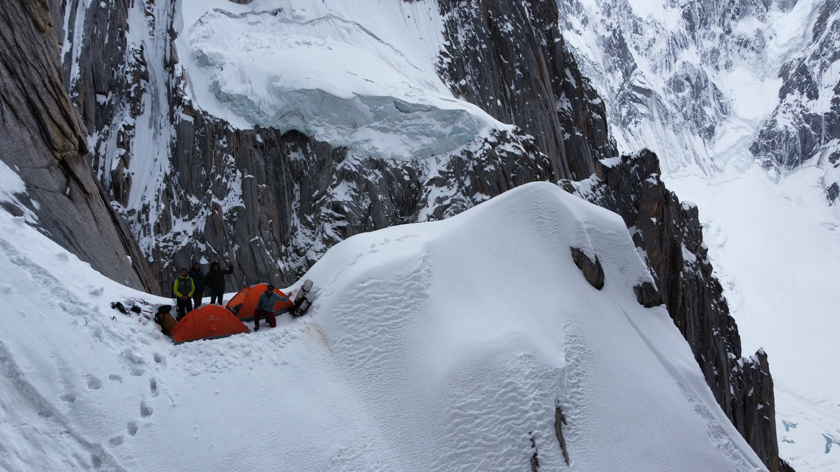
A long and challenging climb, characterized by extreme conditions, heavy snowfall, and difficult mixed climbing at high altitude. The group chose not to continue toward the main summit due to the dangerous ridge, but emphasized the technical and mountaineering value of the new route.
4Outdoor is also on Whatsapp. Just click here to subscribe to the channel and stay up to date.
An extreme climb to the south shoulder of K7
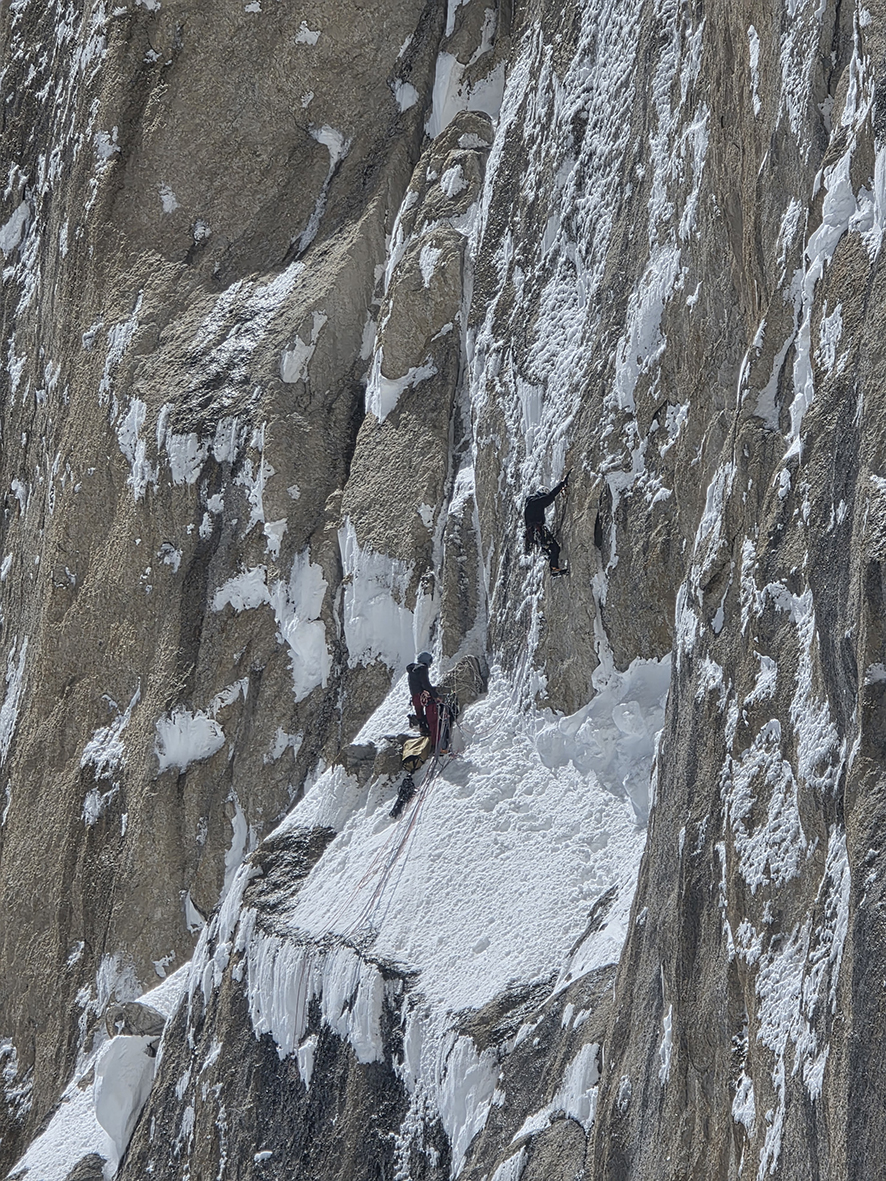
An imposing, complex wall, decidedly more difficult than the photographs suggested.
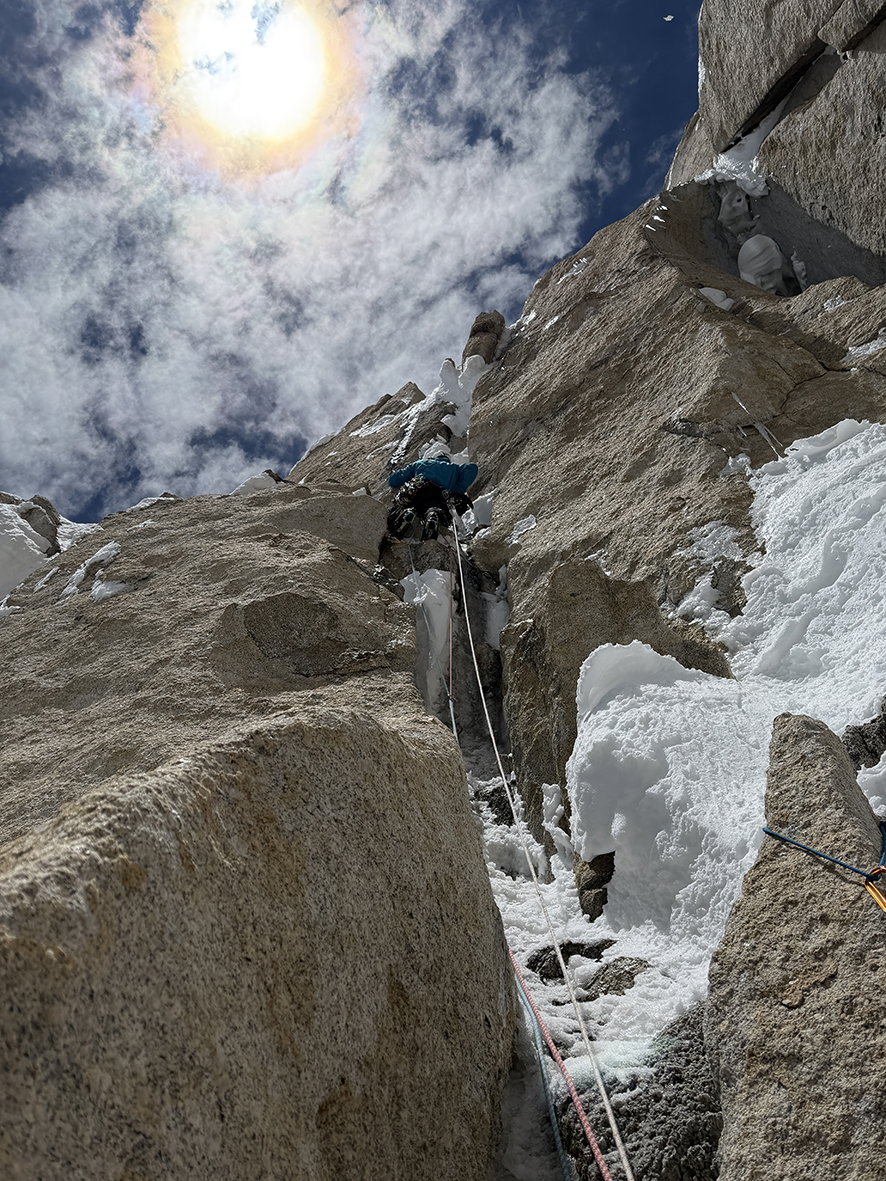
Heavy snow, harsh weather, long mixed sections, and sections of hard, vertical ice above 6,300 meters provided the backdrop for the feat by Matteo Della Bordella, Mirco Grasso, Luca Ducoli, and Giacomo Mauri. The four climbers established Rollercoaster (M7, WI5+, A1), a new route on the southeast face of K7, Pakistan, reaching the mountain’s south shoulder.
The four remained on the wall from June 24th to 29th to complete a 30-pitch, approximately 1,600-meter route. The new route reaches the crest at approximately 6,600 meters on the southwest ridge, where it connects with the historic Japanese route established in 1984.
The team decided to abort the ascent before the main summit of K7 Main (6,934 m), deeming the risk associated with the large cornices and the enormous amount of snow along the ridge too high. This decision was made directly on the ground after several days of intense work on the face during the expedition sponsored by the Italian Alpine Club.
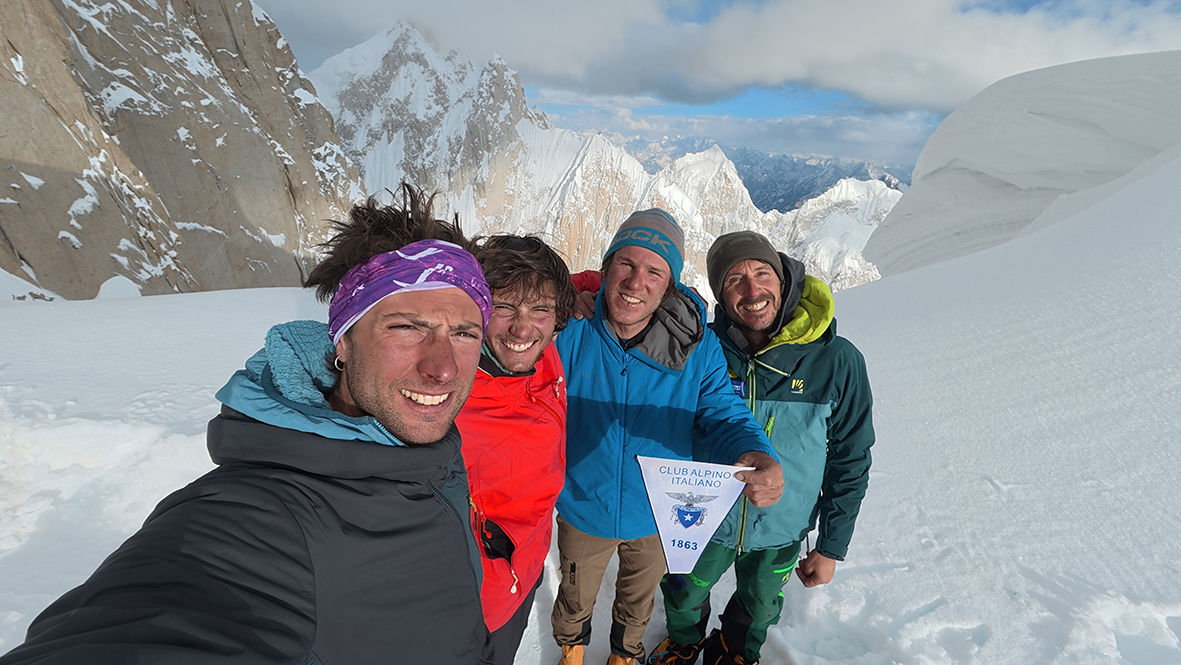
Matteo Della Bordella: “A much more difficult climb than expected.”
“There was an incredible amount of snow: it was an almost entirely mixed climb, in truly difficult conditions,” says Matteo Della Bordella. “I didn’t think it was possible to climb that face in such conditions. In the end, step by step, we managed to continue because we believed in it all the way. I have to thank my expedition companions, who never stopped believing in us. It was a much more challenging climb than we imagined.”
Della Bordella also highlights how the wall can be deceptive when viewed in photographs: “In a photo, it almost looks like a leaning wall, but the reality is completely different. Every pitch was tough and took hours to complete. Climbing extremely hard vertical ice at 6,400 meters completely changes your perception of difficulty: grades that are manageable at lower altitudes become extremely challenging up there.“
The summit remained the ultimate goal, of course, but the conditions on the upper part of the mountain required caution. “We would have liked to reach the summit, and we did everything we could to achieve it,” adds Della Bordella. “But it would have been a step too far. The snow made the ridges and cornices too unstable: we had to dig to find the ice.“
The logic of the path and the choice to stop
Mirco Grasso also emphasized the mountaineering integrity of the climb and the group’s decision: “It wasn’t easy. The conditions were truly terrible, but we tried to get the most out of this expedition. The route ends naturally on the south shoulder of K7 and would have ended there anyway. From that point begins the only route that follows the entire ridge, the one pioneered by the Japanese. We didn’t stop on the shoulder because we were forced to retreat: it was the logical conclusion of the line we had chosen.“
Luca Ducoli: the collapse of the frame confirms the choice
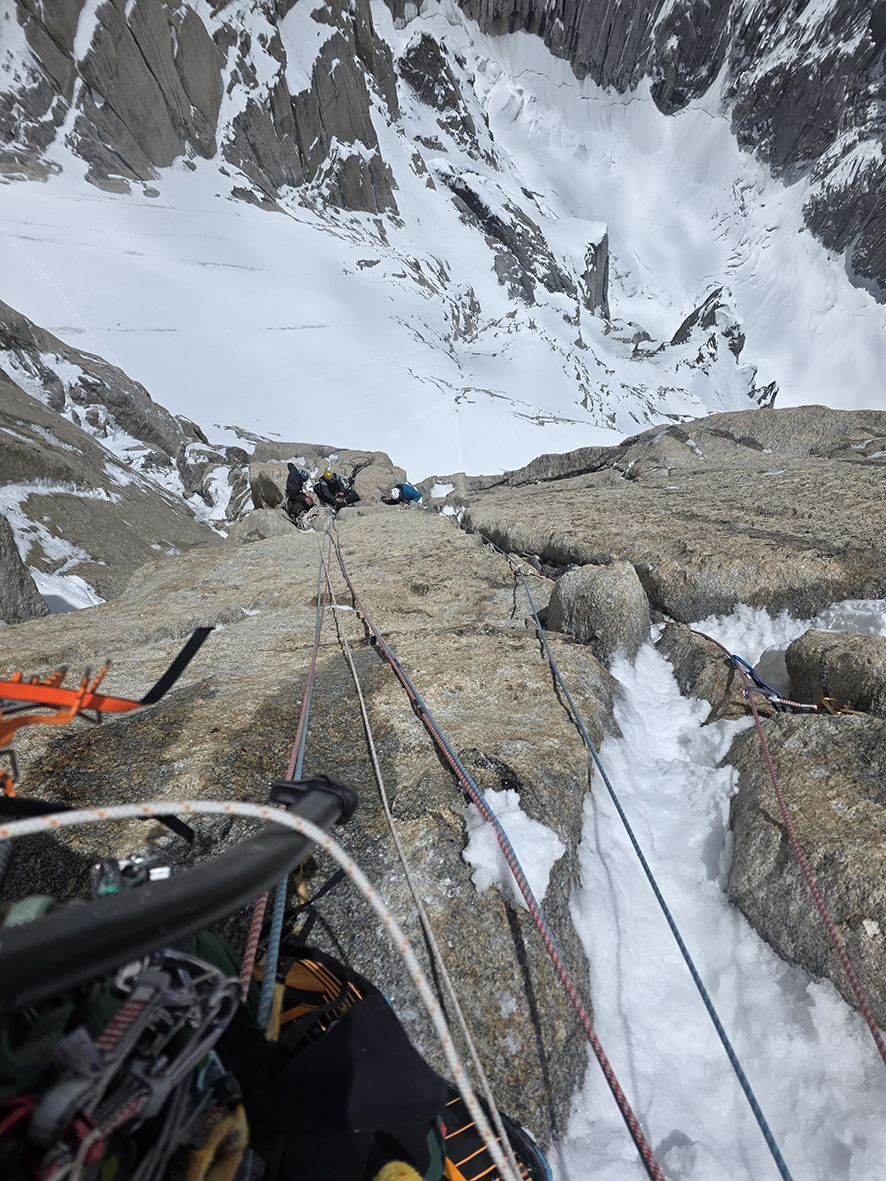
For Luca Ducoli, his first real experience in an international expedition, this climb represents a fundamental stage in his journey. “It was the best experience of my life. I’m sorry not to have reached the summit, but given the conditions I think we made the right decision.“
The sudden collapse of a cornice right under his feet definitively confirmed his decision: “When it fell, I was really scared. I was about to climb the ridge, and as I planted my ice axe, the cornice collapsed on the other side. At that moment, I realized that turning back was the right choice. It would have been nice to reach the summit, but it was right to stop.“
Giacomo Mauri: An expedition that looks to the future
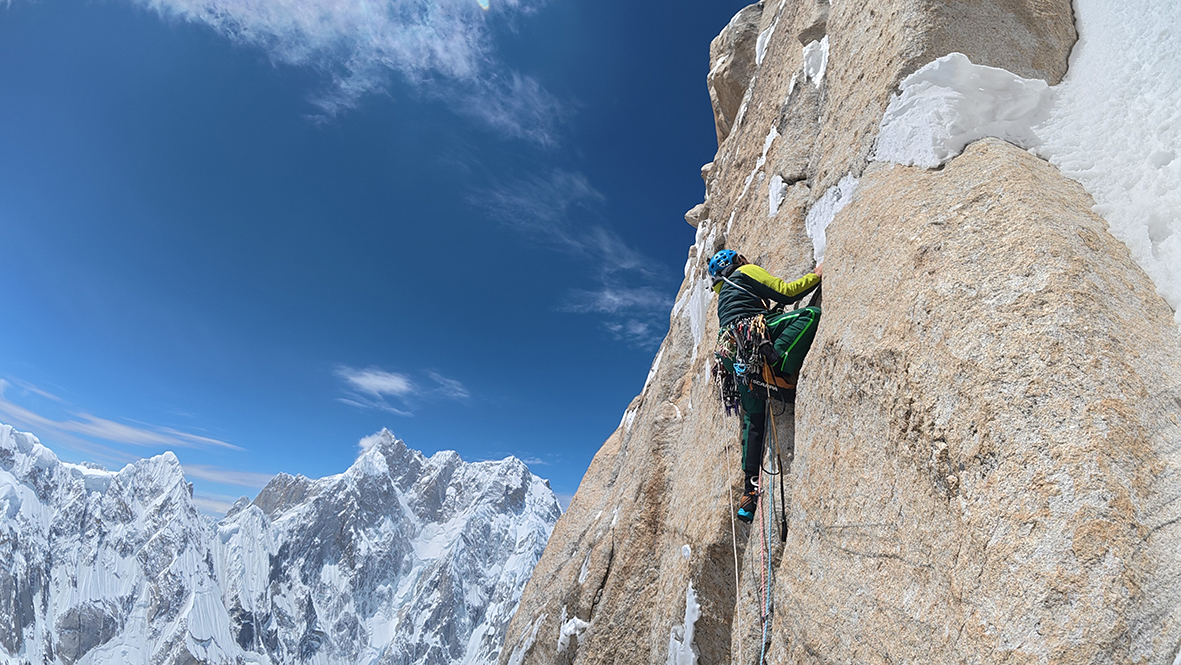
Giacomo Mauri considers this climb an important milestone both from a mountaineering perspective and in terms of the group’s growth: “The goal was to give everything we had, and it’s nice to know that in the future we will be able to face new, even more important challenges.“
According to Mauri, the expedition only lacked the summit, but that doesn’t diminish the significance of the feat: “The icing on the cake was missing, but the cake was definitely there. Throughout the expedition, we performed well at every stage. We structured the attempt in the right way, and that’s precisely what allows us to undertake and replicate expeditions of this caliber.“
For Mauri, the real key is being prepared when the mountain offers the right opportunity: “Favourable conditions are the hardest thing to find, because they’re beyond our control. What we can do is show up ready, well acclimatized, with our gear organized, and everything set up correctly. Many talk about luck when a mountain is climbed quickly, but the truly important thing is learning how to build a successful attempt.”
A new route on K7 of great mountaineering value
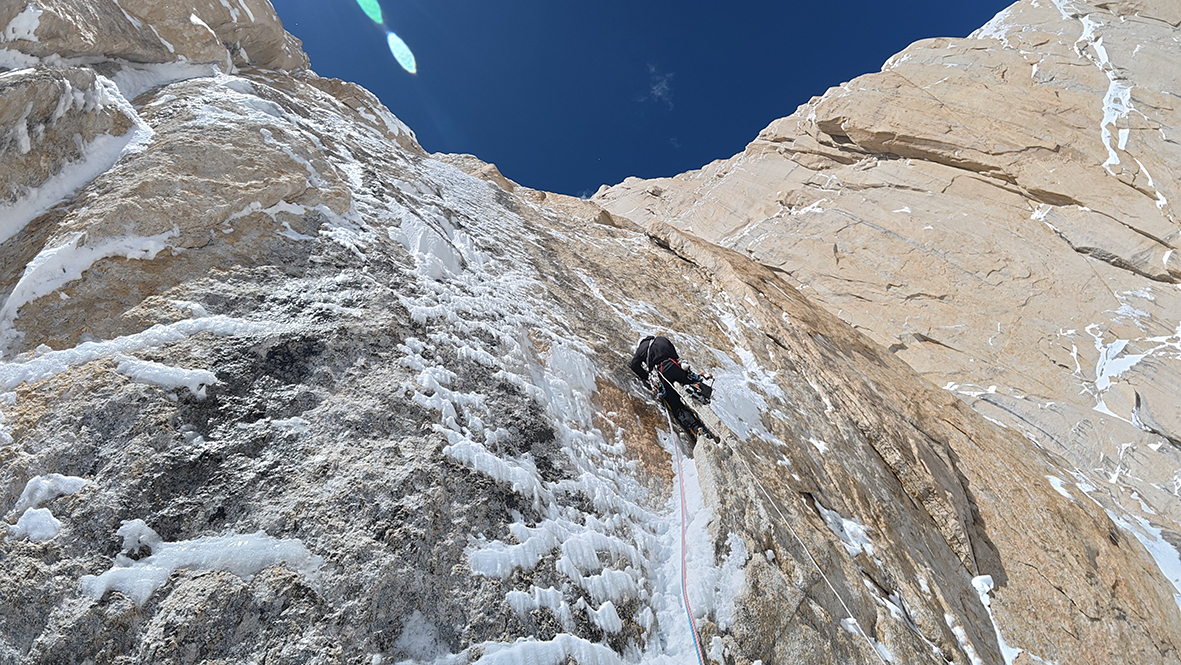
The K7 expedition concluded with a significant mountaineering achievement: a new route completed to its natural end on the mountain’s south shoulder, facing conditions deemed by the team to be much more difficult than expected. The summit remained unreached, but this did not diminish the significance of an undertaking that demonstrated preparation, experience, adaptability, and the resolve to give up when the safety margin became too thin.
The expedition was sponsored by the Italian Alpine Club (CAI)
The four climbers decided to dedicate the climb to the memory of the Lecco Spider Mario Conti, whose remains were found on the day the expedition left Skardu to reach base camp.