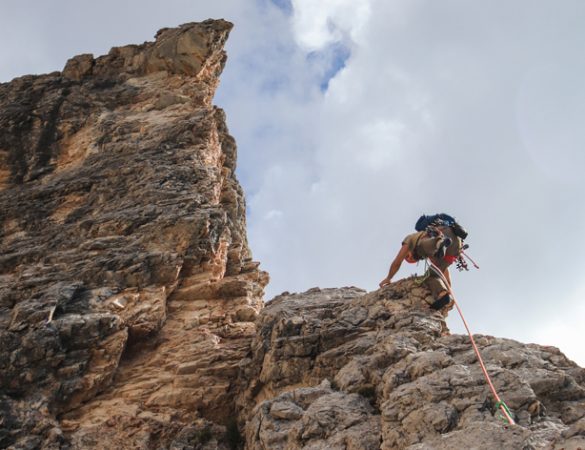




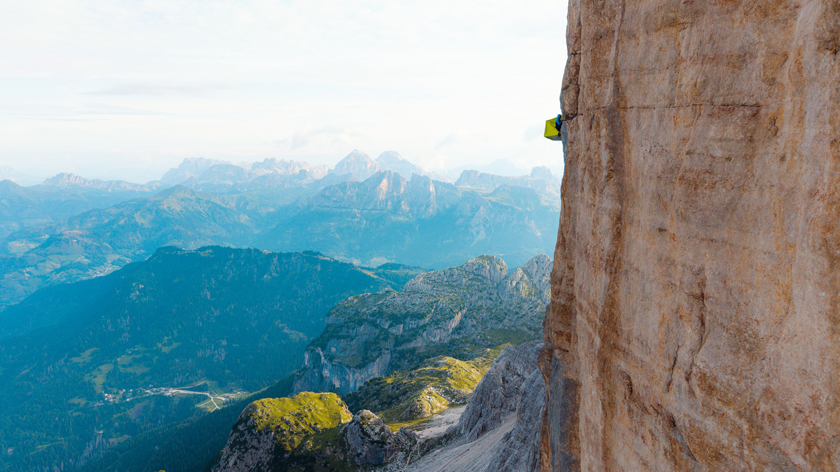
The two mountain guides have completed the first free ascent of “Pilastro Renato” (670 m, IX+, 17 pitches), a demanding route on the northwest face of Civetta. It is a project that began three summers ago and has now reached its final chapter.
4Outdoor is also on Whatsapp. Just click here to subscribe to the channel and stay up to date.
Between July 22 and 23, 2026, mountain guides Alessandro Baù and Nicola Tondini completed the first free ascent of “Pilastro Renato” (670 m, IX+, 17 pitches), a route established ground-up and without bolts on the Northwest Face of Civetta between the summers of 2024 and 2025. The route is dedicated to the memory of Renato De Zordo, the longtime manager of the Coldai Refuge who passed away last summer.
The ascent was achieved in “team-free” style, with every pitch climbed free by both the leader and the second. By July 2025, the two climbers had completed the route to the summit—reaching a major milestone—yet the project remained unfinished, as a continuous free ascent of every pitch was still missing.
Returning to the wall in the summer of 2026 to complete the full free ascent was therefore the natural conclusion of a journey begun years earlier, bringing to fruition the original idea behind the route.
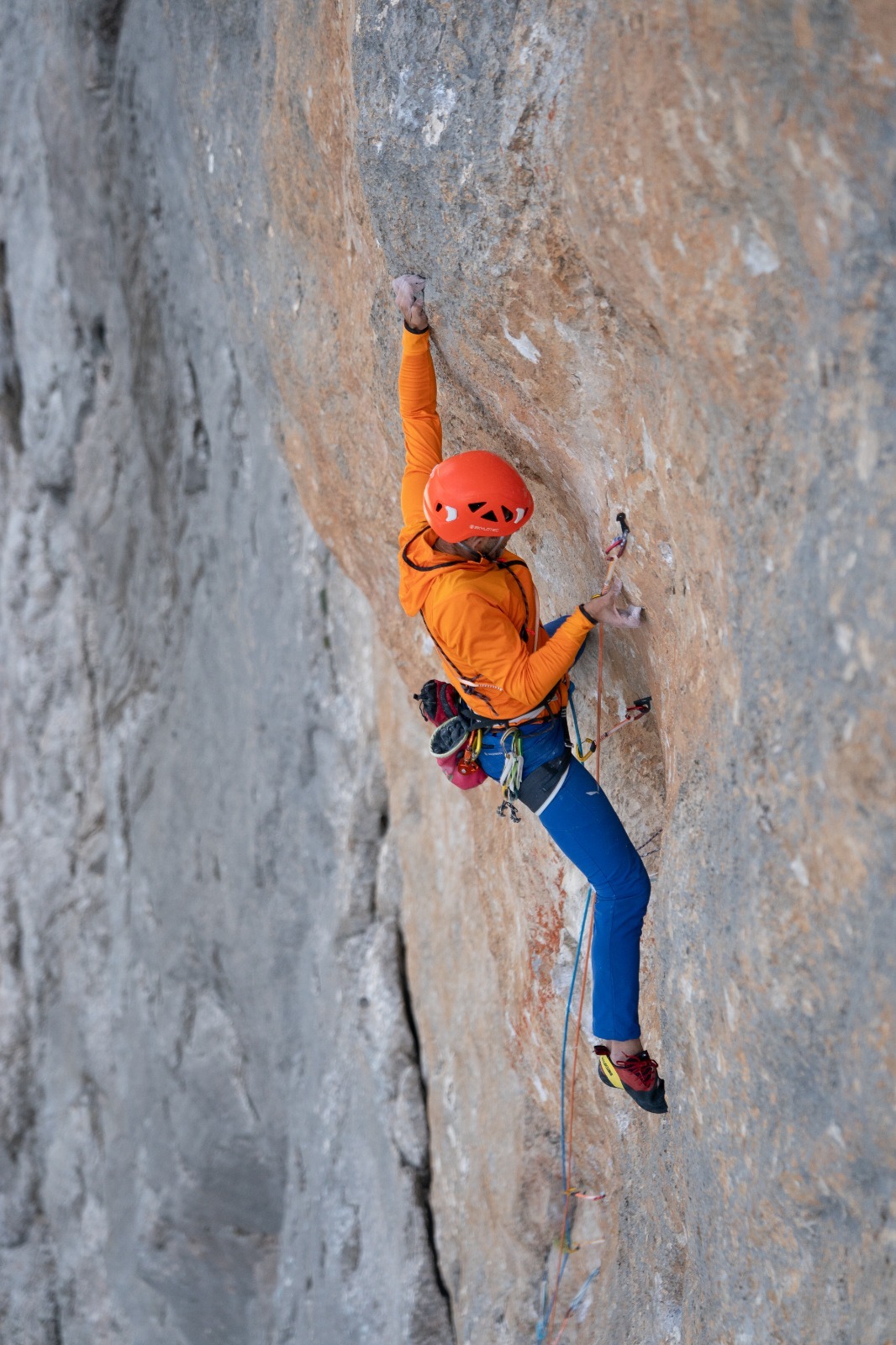
The free, continuous ascent of “Pilastro Renato”
The final chapter of the story began on the morning of July 22nd, when the two climbers left the Tissi Hut at first light, heading toward the base of the wall. Frigid air accompanied the approach, creating favorable conditions with dry rock and excellent grip.
The first seven pitches, up to grade VI+, were climbed without any particular difficulty. From the eighth pitch onwards, however, the route’s pace changed decisively, featuring an VIII– crack that required placing friends for protection along its entire length.
The next section brought the pair beneath the yellow wall of the ninth pitch (IX+)—a complex, exposed pitch characterized by airy run-outs. During the route’s establishment, that section had seemed particularly difficult to tackle without using bolts. Tondini led the pitch on his first attempt, placing the quickdraws, followed by Baù seconding.
On the tenth pitch (VIII+), Tondini took a fall shortly after the start, though he succeeded on his second attempt.
The lead then passed to Baù on the eleventh pitch (IX), a dihedral followed by a 15 meter crack on compact rock. This pitch was also climbed on the first attempt as the leader and then climbed free by Tondini as the second.
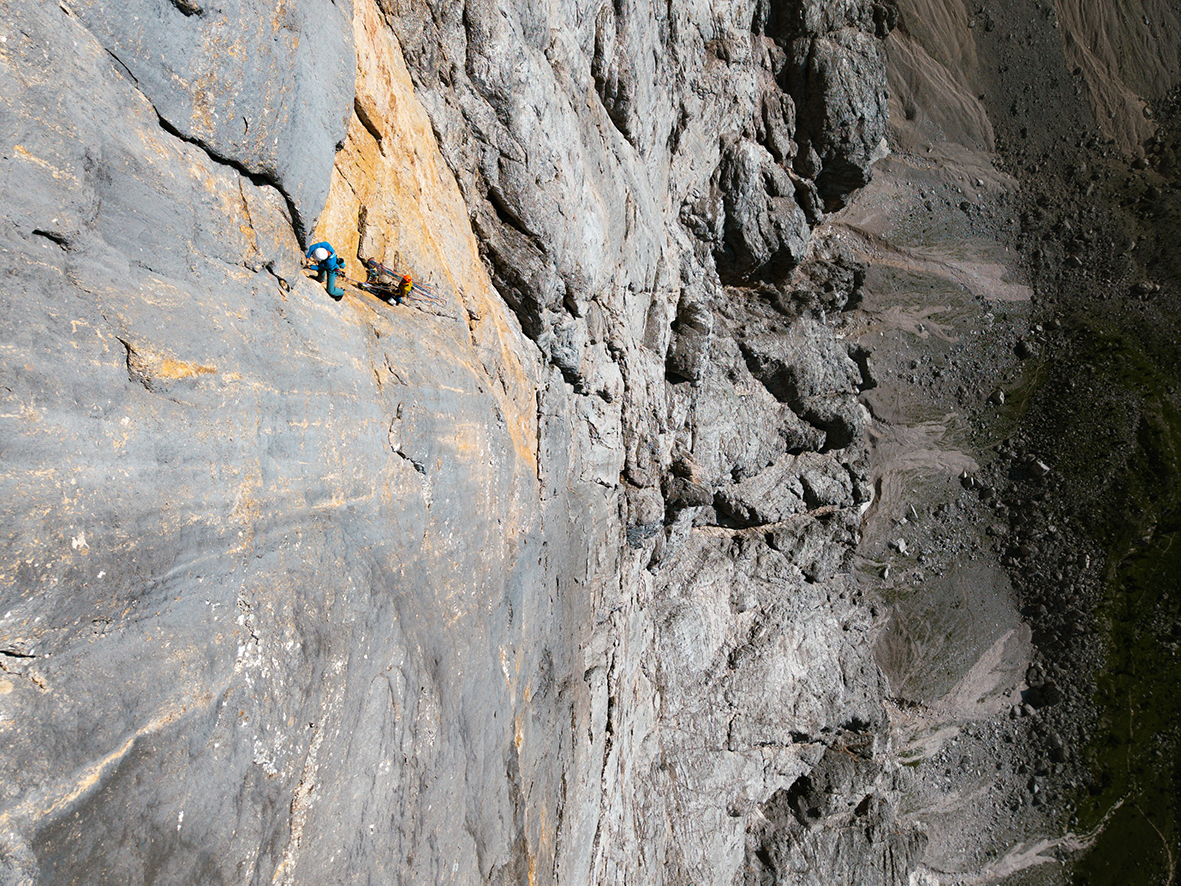
Before nightfall, the climber from Padua tackled the first section of the twelfth pitch—one of the route’s two crux sections, rated IX+ and originally climbed using aid techniques. The goal was to review the moves in preparation for the decisive attempt.
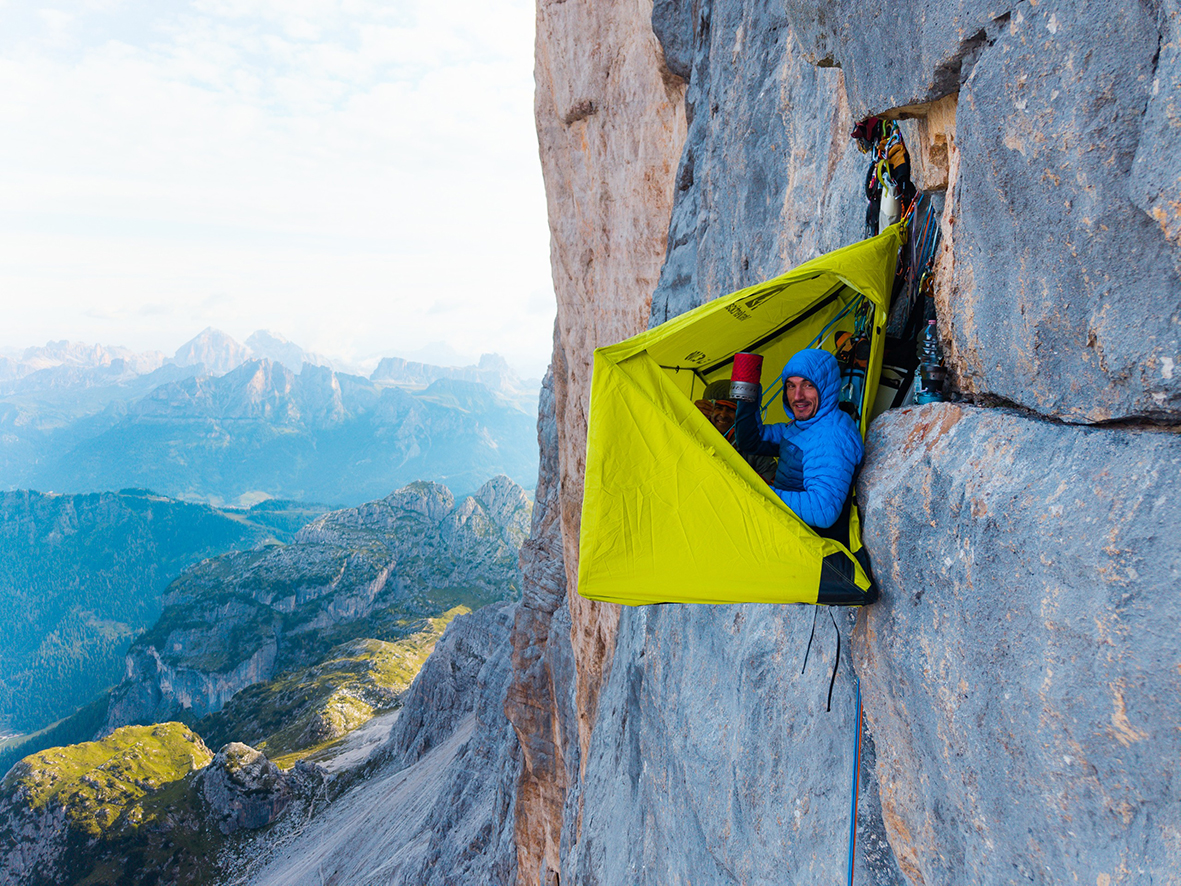
They spent the night on a portaledge. On the morning of July 23, with temperatures on the wall hovering at just four degrees, the two climbers focused on the crux pitch. Tondini, who had initially set out for a reconnaissance run, managed to send the pitch on his first attempt.
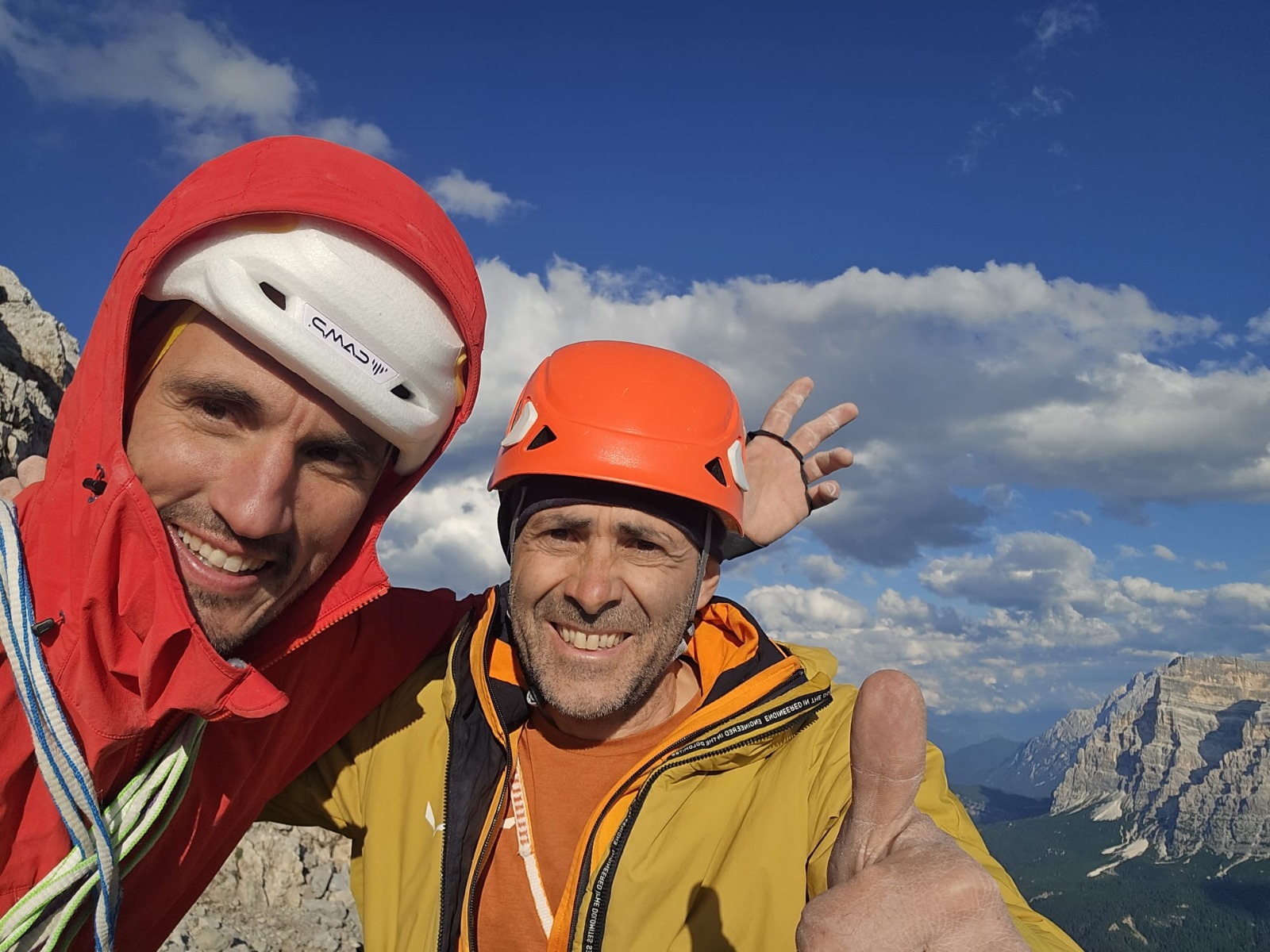
At that point, confident of the outcome, the two men dismantled the portaledge. It was Baù’s turn. The goal was to reach the summit and shake hands after both having led the decisive section—a pitch they had established by splitting the length in half, just as they had done with the ninth pitch.
Baù was stopped at the crux when a hold broke. However, after a brief pause, he resumed climbing, managing to send the pitch on his second attempt and thus complete the full free ascent.
From the crux section to the summit, four pitches remained, all climbed by the team on the first attempt.
From dream to reality: how the “Pilastro Renato” route came to be
The story of “Pilastro Renato” began long before the 2026 ascent. Indeed, the first chapter dates back to 2009, when Nicola Tondini and Alessandro Baù began considering the possibility of establishing a new route on the northwest face of Civetta.
At the time, the two identified the left section of the wall but deemed it too difficult to tackle without bolts. They therefore decided to shift their focus to Punta Tissi, where the route “Colonne d’Ercole” would later be established.
The idea remained a dream for years, until a late-summer afternoon in 2023, when the angle of the light allowed Tondini to spot what would become the route. Baù immediately shared the vision, yet it remained on hold for another year before they finally turned it into a concrete project.
The opening from below and without bolts
In July 2024, they began a ground-up ascent without bolts. After completing the first eight pitches, the pair tackled the ninth—splitting the pitch in two—and then continued onto the tenth and eleventh. However, protection became inadequate, while both energy and pitons began to run low. The team was consequently forced to stop.
In July 2025, Tondini and Baù returned to the wall alongside Alessandro Beber. They quickly dispatched the first eleven pitches before reaching the twelfth. There, the pair decided to follow a line slightly further to the right: Tondini led the first section, while Baù—after a ten-meter fall—completed the pitch by resorting to three meters of aid climbing, given the precarious protection options.
A storm forces them to interrupt the project again. At the end of July, however, Baù and Tondini returned to the wall, once again starting from the bottom, and completed the last five pitches to the summit.
During the descent, a phone call arrives from the manager of the Tissi Refuge, informing the two of the passing of Renato De Zordo, historic custodian of the Coldai Refuge for 45 years together with his wife Enza. News that will give a name and an even deeper meaning to the route just completed.