



Born in Padua 35 years ago, Silvia developed a passion for mountains and climbing at an early age. After graduating in Tourism Economics, meeting Stefano Ragazzo and traveling with him to Patagonia, her future became clear. Having become a Mountain Guide, she began traveling the Alps from Chamonix, where she lives, climbing the most iconic routes and even taking part in international expeditions, including the women’s K2 expedition three years ago. But you don’t always have to travel to the other side of the world to realize a project. Why not enjoy a summer adventure, cycling up six south faces from the Ligurian Sea to the Adriatic?
Sometimes all it takes is a little creativity and a good friend to make your dreams come true.
4Outdoor is also on Whatsapp. Just click here to subscribe to the channel and stay up to date.
Silvia Loreggian, the interview
The name “South 6” suggests something alternative. North faces are often the most ambitious mountaineering goals or the ones that spark the imagination of enthusiasts. You’ve chosen six south faces of the Alps.
How did the idea for this project come about?
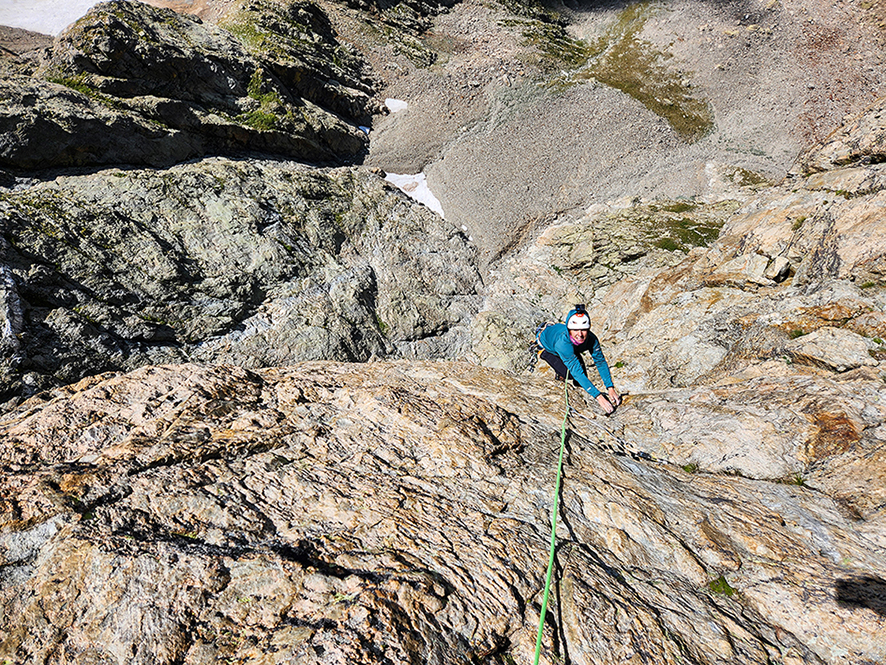
Of course, I myself love classic mountaineering practiced on north faces, but on them, due to the obvious climatic conditions and terrain, you cannot benefit from the beauty of raw climbing, which at advanced technical levels is what best defines my relationship with the mountains.
I had been thinking about a project like this for a long time: climbing some south faces, and three years ago at K2 base camp, after a winter in the Alps, I realized it was time to make it happen and dedicate some time to the type of climbing I love most.
I had also been traveling a lot for a couple of years, a couple of expeditions a year, and I really wanted to climb in the Alps in the summer, which I consider the most beautiful mountains.
The idea of linking the 6 Sud was the next step, and the idea of doing it by bike came from my friend and Alpine Guide Aurélia Lanoë from Chamonix, to whom I had proposed the initial project.
Is the bicycle a means of transport you use regularly?
No, for me the bicycle is usually a means of transport that I use for short trips, I’ve never practiced it as a sport or a means of travel, so I was curious to test myself.
Did you train before tackling the project?
In reality, there was very little time to do it. I bought the bike about a month and a half before leaving, and since I got it, I’ve tried to replace my usual running workout with cycling, mostly to get used to the position on the saddle.
Luckily, since we are both Alpine Guides, we have very trained legs, so we didn’t suffer any muscular pain.
You mentioned your traveling companion, Aurélia. To share an adventure like this, do you have to be similar or complement each other, in spirit and ability?
I believe it’s easier to share/live with someone similar to you than to be attracted by opposites. Aurélia and I are similar—very practical, enthusiastic, and proactive—so imagining an opposite in a moment of physical or psychological stress would be a difficult burden to manage, I think.
The biggest challenge between us was communicating, in different languages, under pressure. I speak French, but when we were swearing on the wall, each in our own language, it became difficult to understand each other.
From Ventimiglia to Monfalcone, linking the faces of Corno Stella, Mont Blanc, Wendenstöck (Bernese Oberland), Rätikon (Switzerland), Marmolada, and Cjanevate (Julian Alps, Friuli). How did you choose the route and faces?
The itinerary and the choice of faces were built slowly. For me, the pillars of the “south faces” project were the south faces of Mont Blanc and the Marmolada, followed by the Rätikon and Wendenstöck on my wish list (I knew the first, but had never been to the second). At that point, all that remained was to choose a mountain in the southwest and one in the south of the Alpine Arc. Aurélia is originally from the southwest, and I’m from the southeast, so one interpretation could be to start from “her home” and arrive at “my home,” or even start with a dip in the sea and arrive with a dip in the sea. The itinerary was designed to take us two or three days of biking and a couple of days of climbing, thus alternating the activities a bit and making the most of the entire Alpine Arc.
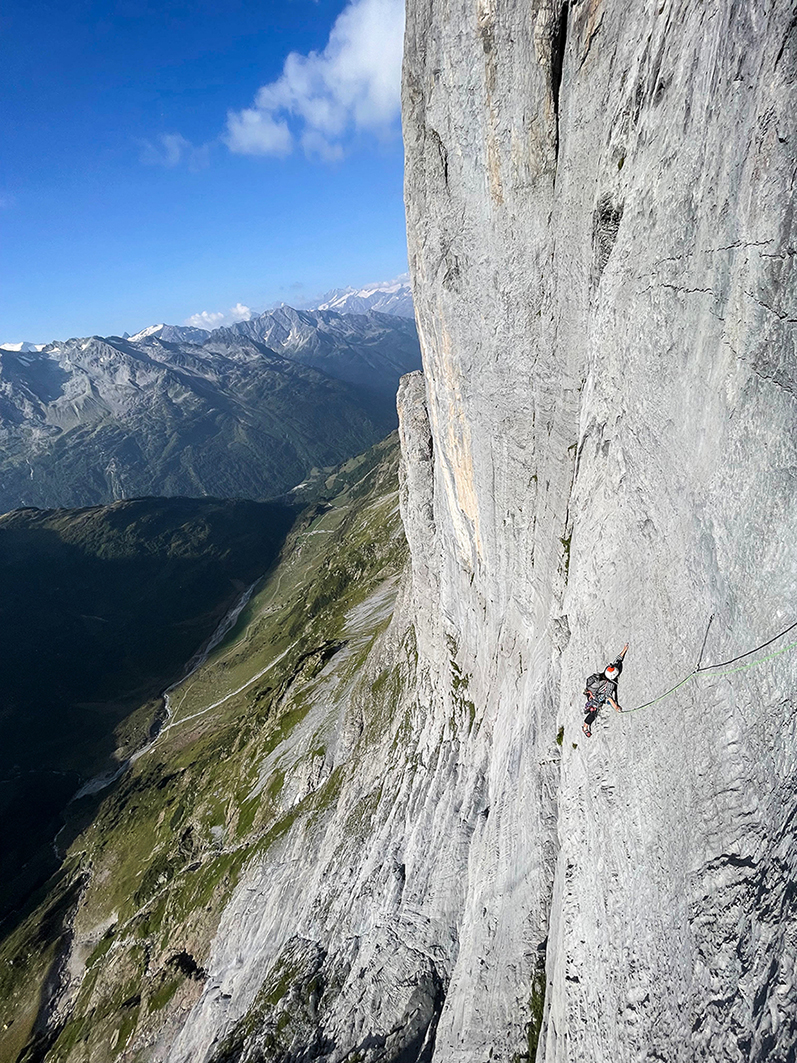
Which of those walls have you never climbed?
I had never been to the Corno Stella area, I had never climbed the Central Pillar of Freney on Mont Blanc, and I had never been to the Wendenstöck or the route I climbed in the Rätikon; I had already climbed “Tempi Moderni” on the Marmolada. Essentially, all the routes were new except the last one mentioned.
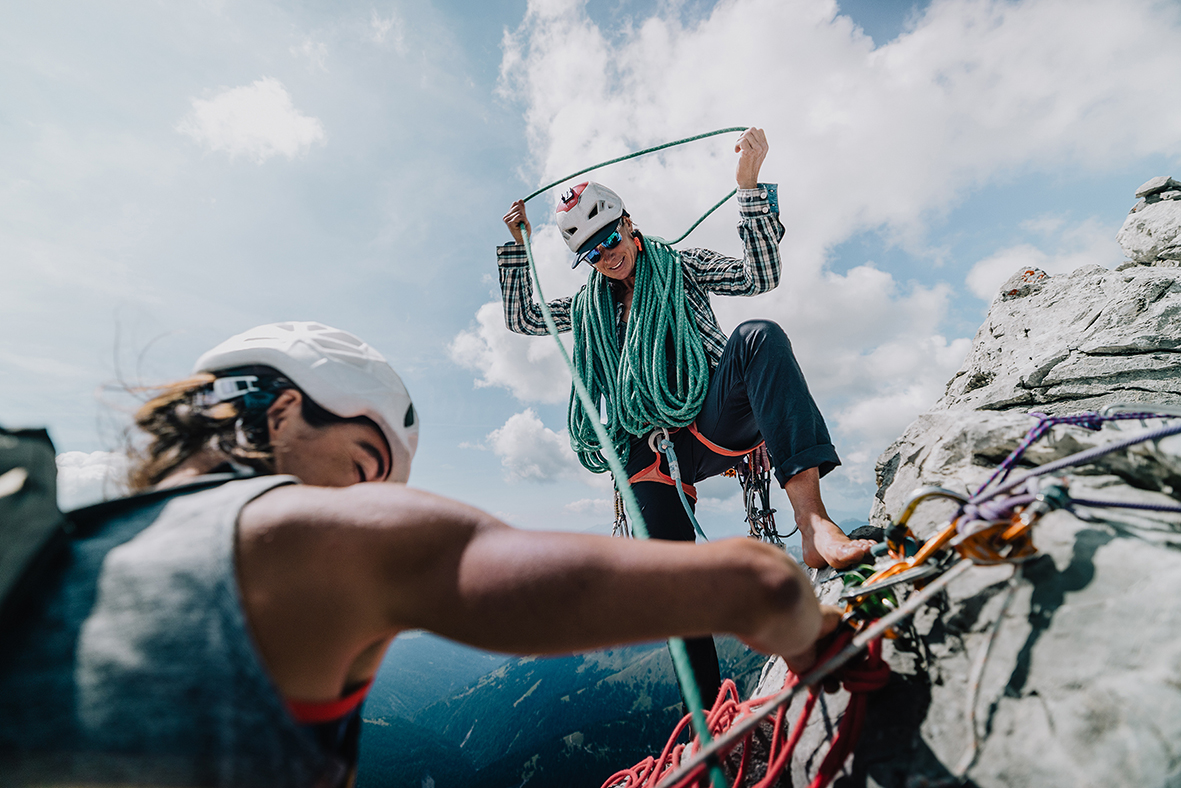
How long was the trip? Did you have any downtime or were you always on the go?
We were on the road for 31 days in total. Before and after climbing Mont Blanc, we took breaks in Courmayeur and Chamonix (at my house), and we took breaks the day before each climb.
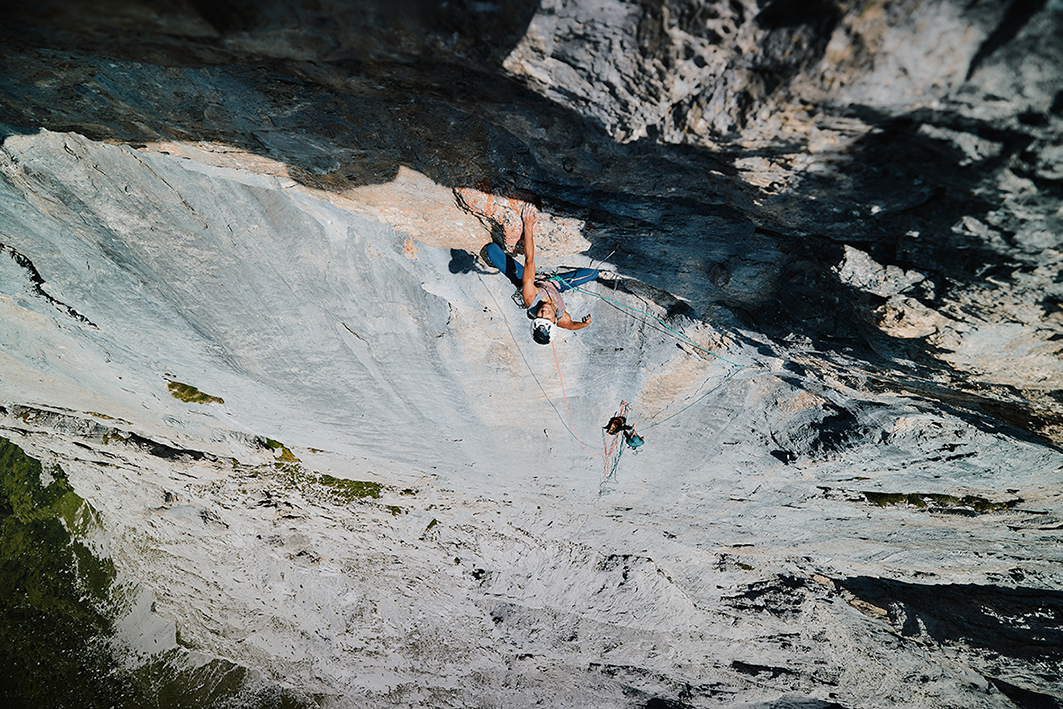
Can all these walls be climbed in a day?
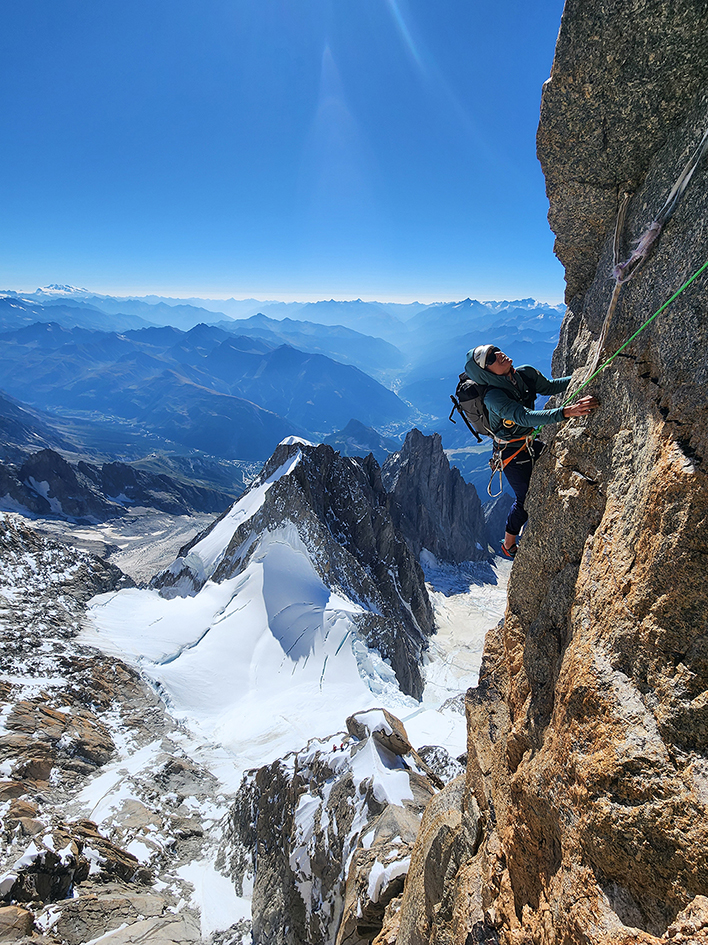
We climbed Mont Blanc in two days, sleeping at the Eccles bivouac (Lampugnani-Grassi). This itinerary is usually done in three days.
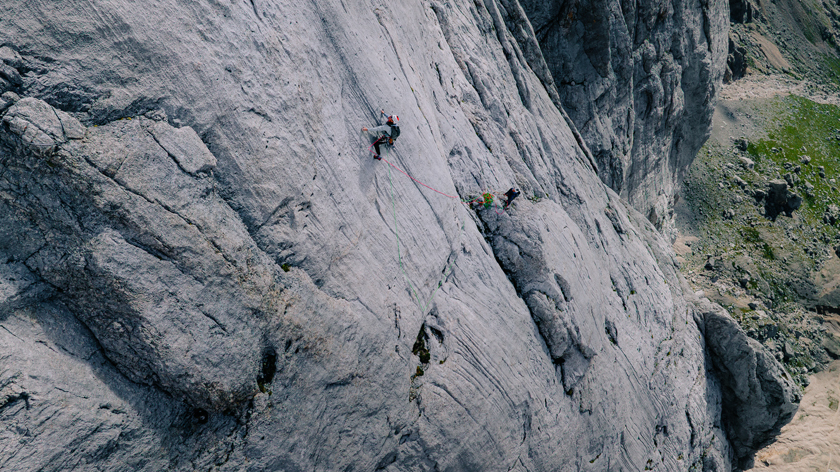
On Marmolada we slept in the refuge at the base, climbing the face on sight in a day.
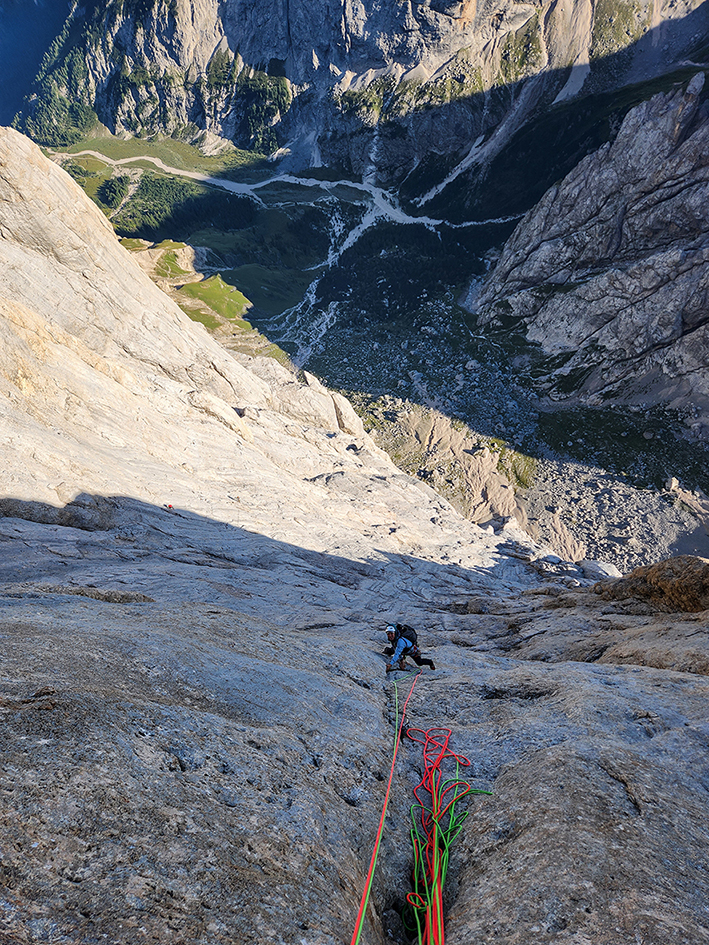
Where did you sleep?
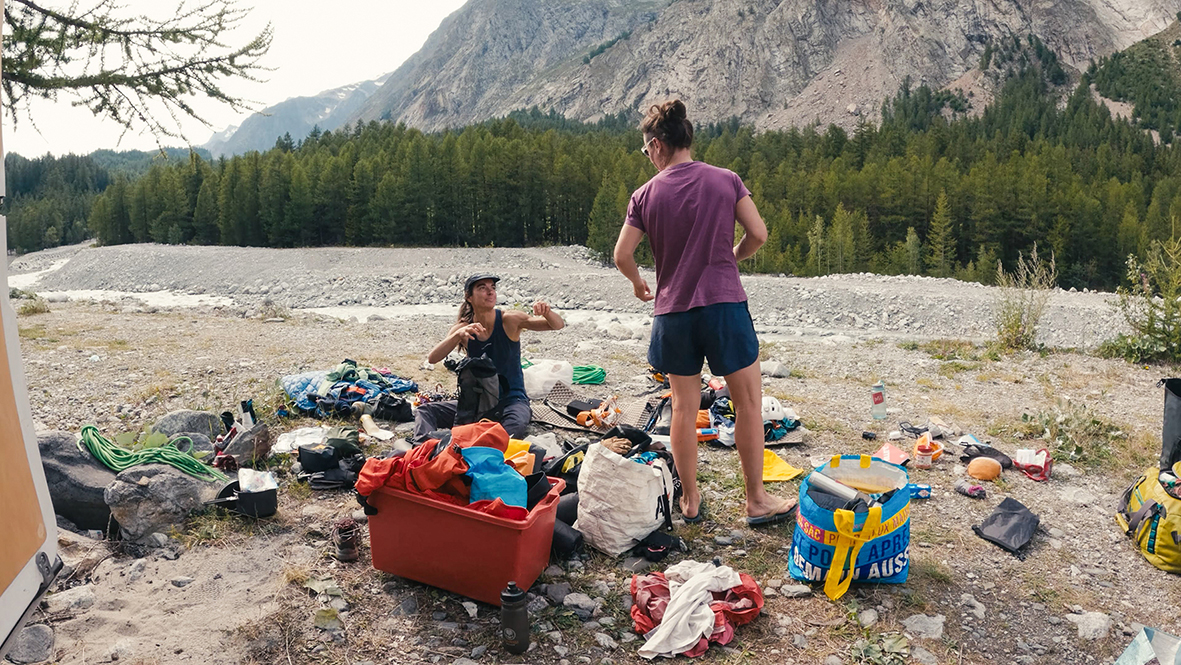
We almost always slept at the base of the wall, in a refuge or tent, or alternatively at the house of some acquaintance.
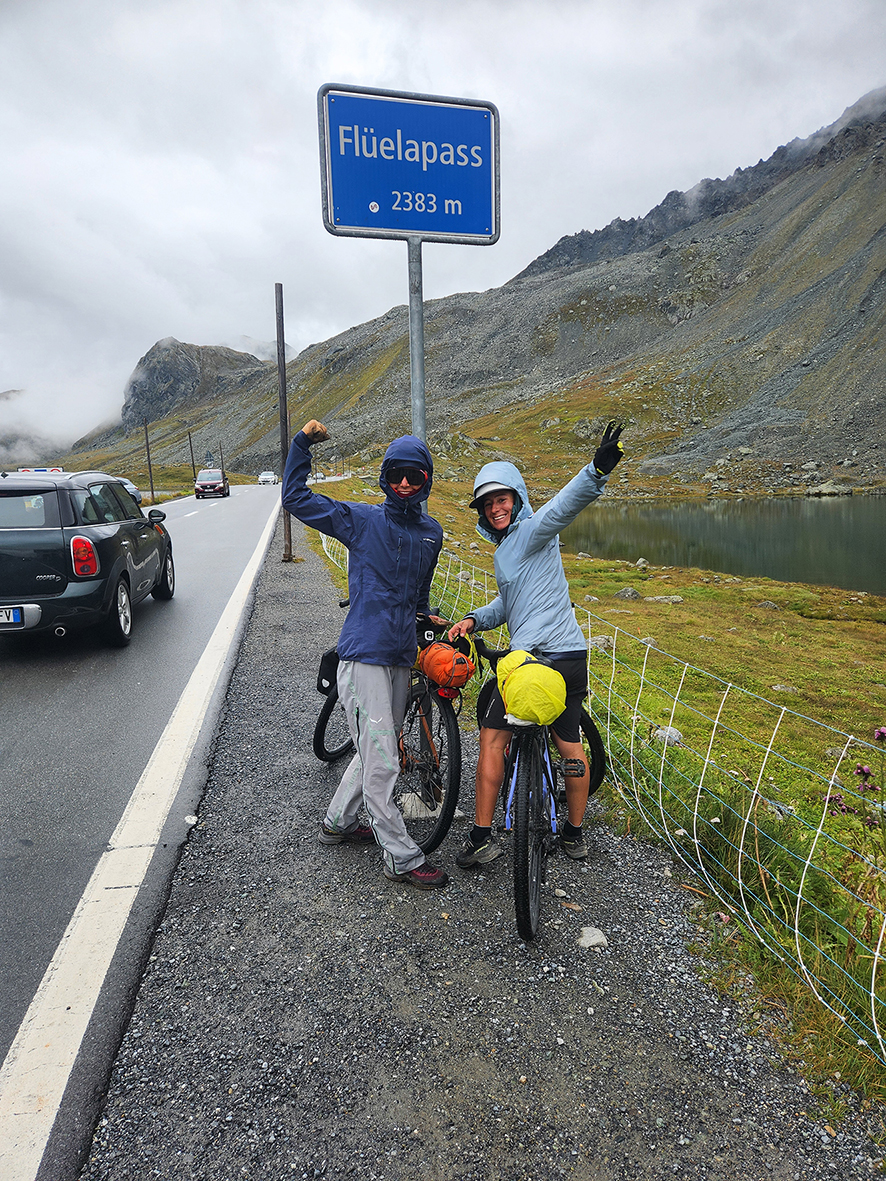
Did you always carry your personal belongings and mountain gear with you? Did anyone help you in any way?
The logistics were complex, and we sometimes made mistakes. We always had the essential camping gear (tent, sleeping bag, stove) and essential climbing gear (a set of quickdraws, ropes, chalk, harness, climbing shoes). Depending on the face, we needed specific gear, such as on Mont Blanc, where we needed boots and crampons. Or on Corno Stella, where we needed trad gear and Friend gear.
So, for example, I had been to Marmolada a month before and had left my things with some relatives, for Mont Blanc a friend brought us the equipment and then we left it at home.
Some friends helped us, but we made sure that no one moved just to help us, otherwise the idea of a zero-impact project would have lost credibility.
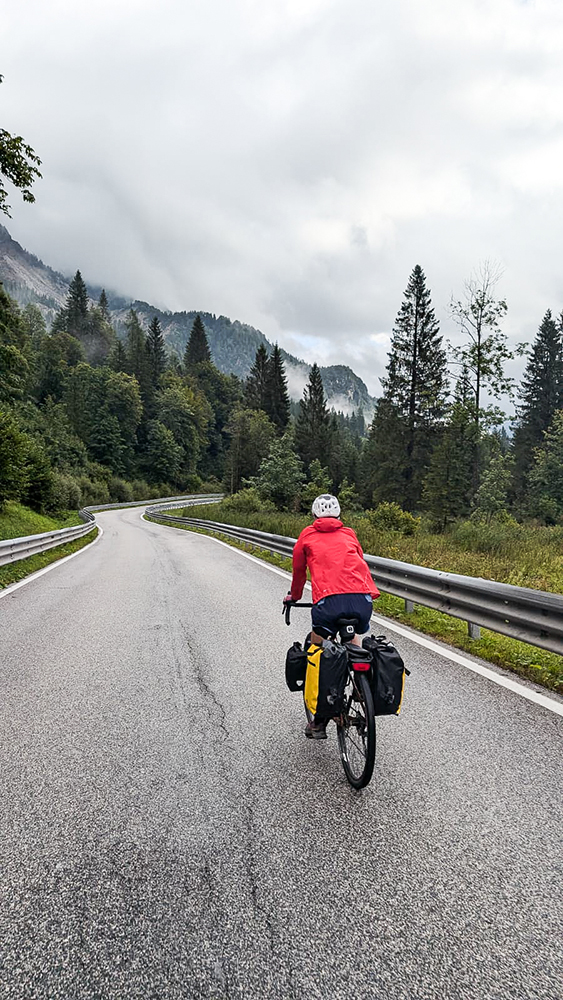
The best moment?
One of the most emotional moments was arriving near Mont Blanc. It’s a mountain we know well, but arriving there from the sea and thinking about crossing it on our own made the moment truly special.
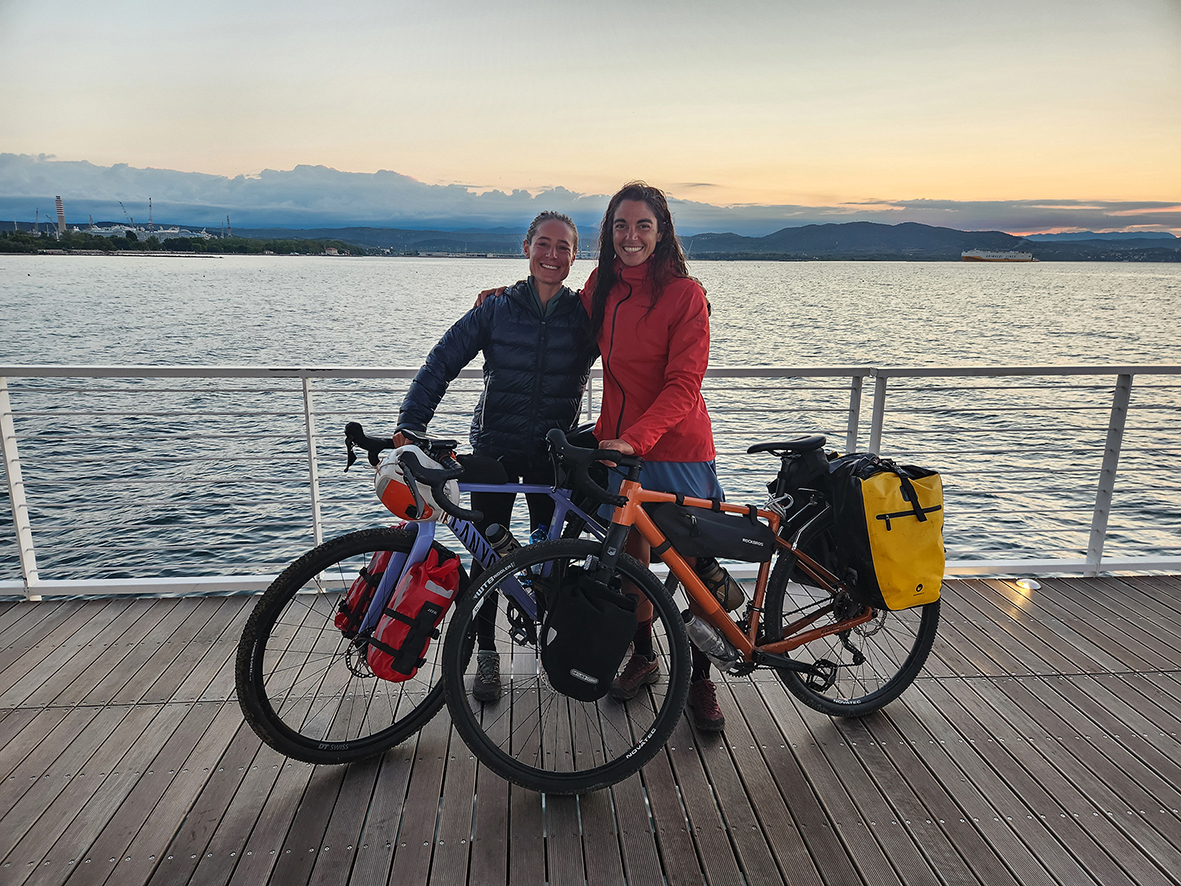
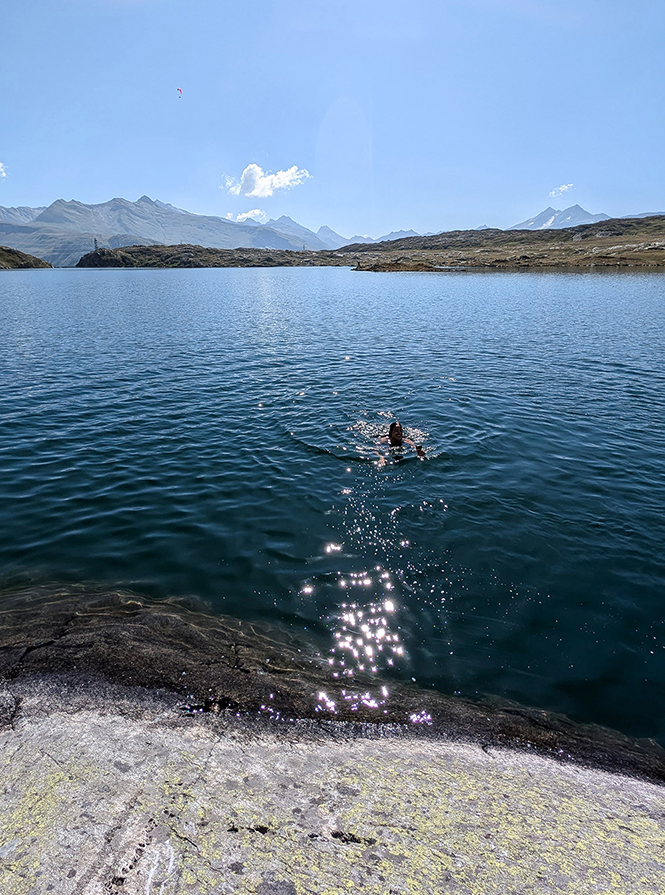
Finally, it was truly special to see the signpost for Monfalcone, marking the end of our journey. Before climbing the last rock face, bad weather forced us to stop at a refuge, allowing us to rest well. As soon as we returned to our bikes, I suggested to Aurélia that we make a single leg to the sea, to watch the sunrise. We had several kilometers ahead of us, and it was already 3:00 PM; we had to pedal all afternoon and all night. Thus began the last leg of our journey, wrapped in a sort of trance, punctuated by coffee breaks, but we actually arrived two hours before sunrise.
Did you finally take the celebratory bath?
Sure! It was a bit chilly at 6:00 in the morning, but a dip was a must.
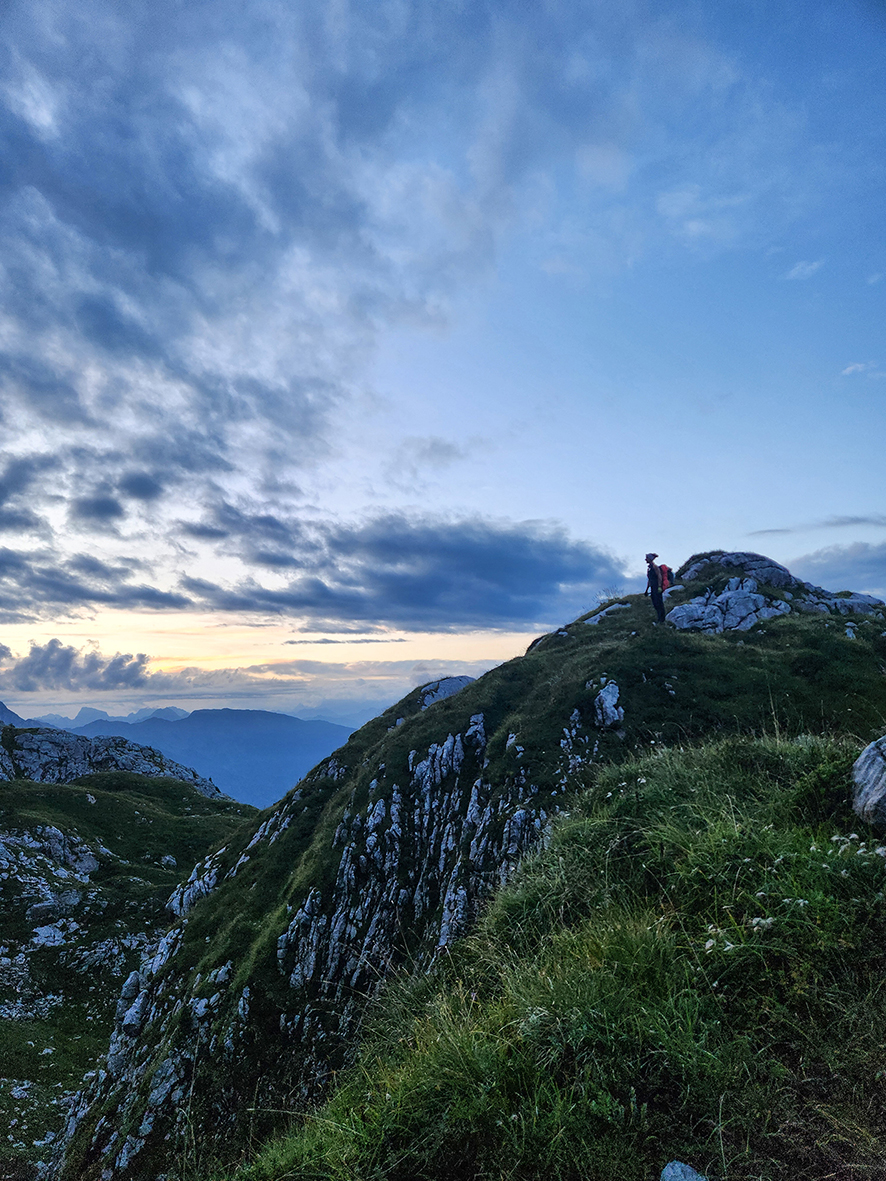
And the most difficult moment?
Finding an agreement on which route to climb on the Marmolada. I have a love-hate relationship with it. I’ve climbed the most important routes in my resume, but I realize it’s a difficult mountain, and when you push yourself beyond your grade, it really puts you to the test. Aurélia had never been there and has a lower grade than me, so from a relationship standpoint, it was difficult to decide what to do. She wanted to climb a higher grade route, but I was worried she wasn’t up to par.
The athletic and psychological aspects have never created problems, we are trained and accustomed to fatigue and stress, the relational aspect has sometimes been put to the test: in a team you always have to find an agreement.
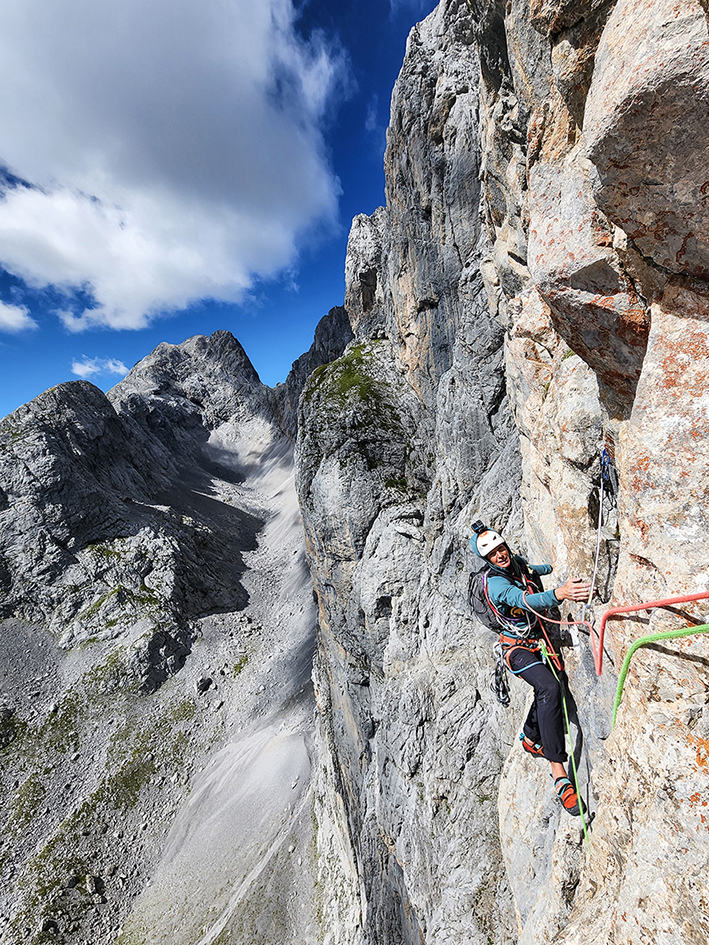
South 6 was a fair means project. What message does this experience convey?
We wanted to convey a message that lends itself to a broad readership. Anyone can bring a project like this to life, with a little creativity and sustainable resources, clearly tailoring it to their own capabilities. Experience all the thrills of travel and adventure, without straying too far from home: the planning, meeting people, discovering the local area, and the sporting component.