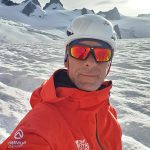




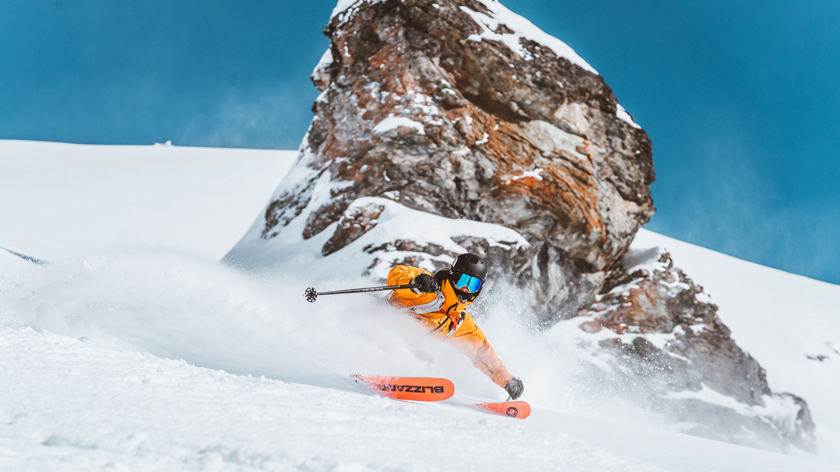
The word resilient is often used to describe certain athletes and their ability to bounce back after a fall, whether physical or spiritual, but the young life and competitive career of The North Face athlete Léo Slemett has truly been punctuated by the highest successes and the deepest chasms.
4Outdoor is also on Whatsapp. Just click here to subscribe to the channel and stay up to date.
He was the youngest athlete to participate in the FWQ in 2012 and, with three podiums, finished second overall, qualifying for the FWT. In 2013, he was forced to stop, discovering he was suffering from Crohn’s disease, and in 2014, at 21, he restarted the FWQ and, with seven podiums, became World Champion. In 2015, he returned to compete in the FWT, meeting and falling in love with Estelle Balet (World Snowboard Champion). In 2016, Estelle died in an avalanche. Leo was devastated but found the strength to carry on and in 2017 he became FWT World Champion. In 2019, he finished third again in the FWT. In 2021, skiing took him on a trip, where he was caught in an avalanche and broke his arms. He started again, but soon afterward, he broke his knee.
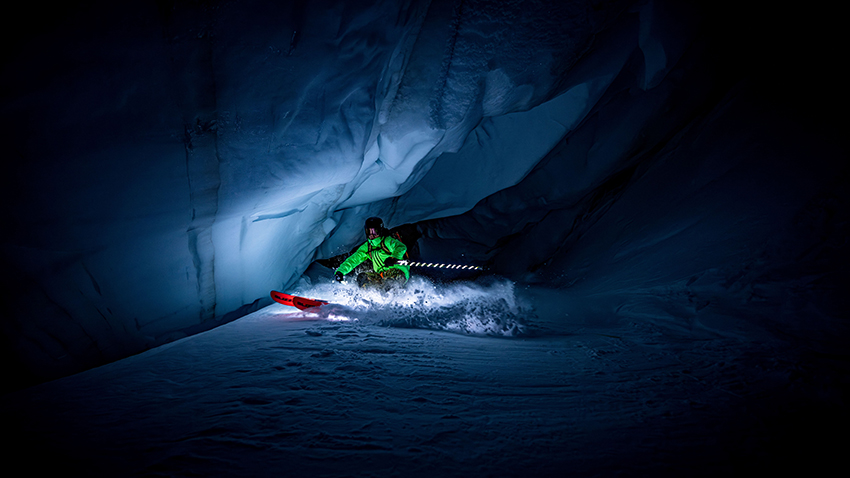
He got back into shape, met Adèle Milloz (a ski mountaineering champion) and fell in love. They shared the desire to try to become a mountain guide, but Adèle died in 2022, along with a friend, while climbing the Aiguille du Peigne.
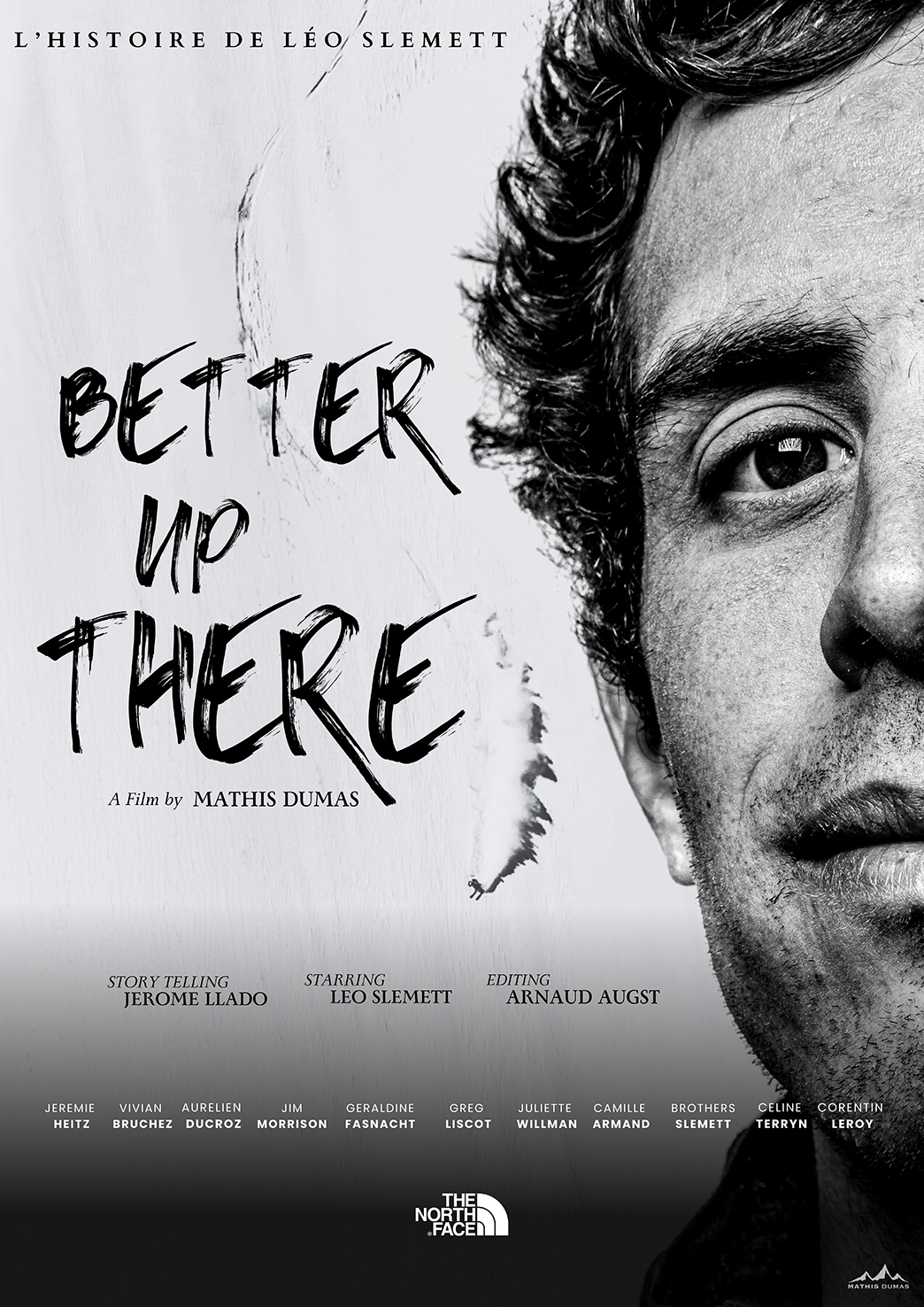
Léo is lost, alone again, forced to put one foot in front of the other, to rebuild himself. Will he make it this time? “Better Up There,” the film that tells the story of Léo Slemett’s life, is the portrait of a champion who always found a way to get back on his feet, and he found it in his unconditional passion for the mountains.
Had he not had such a great passion, the violence of those events would have easily drawn him to the dark side of life, but the mountains have always drawn him toward the light. Where he lost everything, he has always found his way again.
Interview
Let’s start with the present. At 32, who has Léo Slemett become?
Tough question. I’m still a skier with a great love for the mountains, and I love expressing myself through all the activities I enjoy there, from skiing to mountaineering to paragliding. I remain focused on the same environment, the mountains, but with new, probably more personal, projects, such as becoming a Mountain Guide.
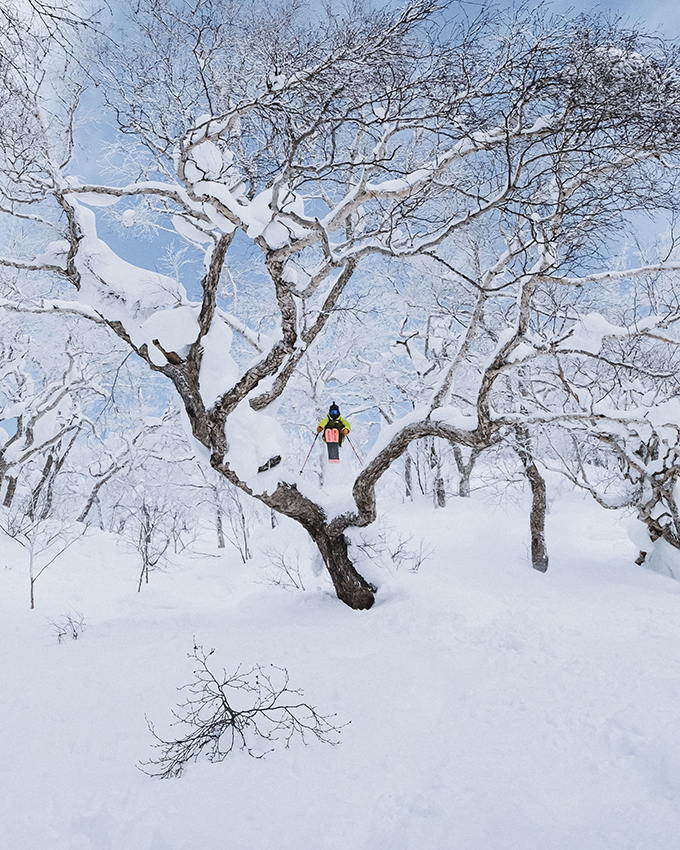
In your competitive career, after winning the Freeride World Qualifier and the Freeride World Tour, in 2026 you were still at the starting gate of the Freeride World Tour stage in Val Thorens.
What did it mean to still wear a bib a few months ago, compared to when you were twenty?
I stopped competing in 2022 to address some personal challenges. I still wasn’t sure if I’d chosen to stop because of what had happened or because I truly wanted to. Would I be able to ski at my former level again? To answer some questions, I accepted the wildcard to participate in the Val Thorens Pro stage of this year’s Freeride World Tour.
It was really not a good time for me but I trained hard for that day and got the answers I was looking for.
It was a real pleasure to ski at a high level again, push myself to the limit and compete with other athletes, but it was tough and really took a lot of energy.
As much as I enjoyed it, I got the answer I was looking for: I won’t be competing in any more FWT races. I feel like my skiing no longer belongs in the competitive world. I really want to do something else.
Yours is a story of goals achieved, punctuated by injuries and terrible misfortunes. The mountain is always at the center.
Where did you find the strength to be reborn every time?
For me, being able to keep moving forward is, in a certain sense, a matter of well-being. The greatest risk would be to stop finding that inner connection that allows me to progress and ultimately find myself stuck on the couch doing nothing. I wouldn’t be able to recognize myself in that situation.
For me, it’s always been about well-being, first and foremost personal. That’s why I learned to ski, but also to get up again, again and again.
Between exploration and competition, how do you define your identity?
I think my identity is multifaceted. For me, both experiences have something to offer. I’m always learning, both when I compete and when I go on expeditions.
I would say that the competitions helped me above all to improve my skiing skills, while the expeditions taught me something more about myself.
Expedition is a different kind of commitment. First of all, you’re away from your family, and then there are the potential risks if something happens. All the decisions you make have to be really carefully considered from the start. When you’re in those situations, you can’t wear a mask or anything else. You’re just 100% yourself.
They’re two different processes, but both teach you. One will help you ski better, the other will help you understand yourself better.
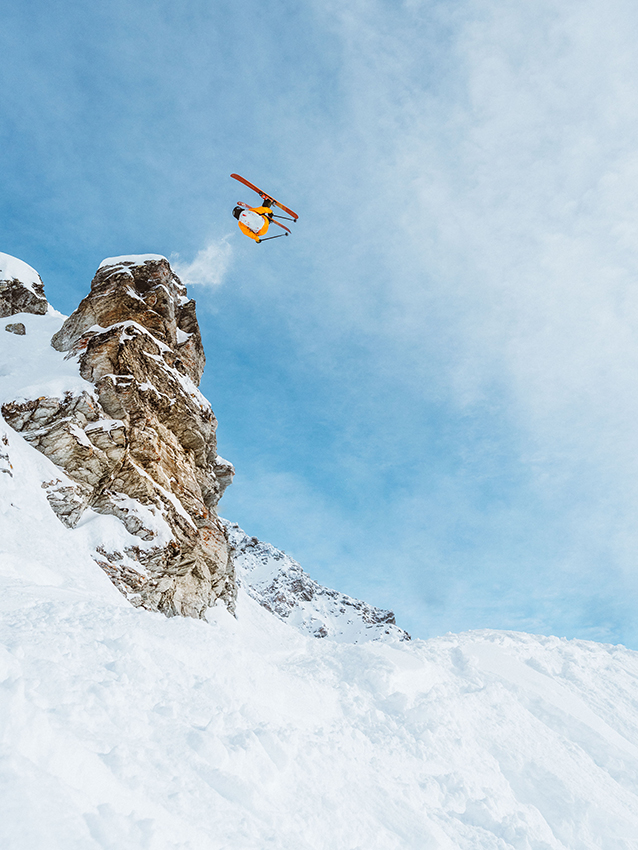
You told us earlier that you want to become a mountain guide. Is there a deeper meaning to your desire to take people to the mountains, to the place where your life has always found meaning?
To be honest, I’m already a ski instructor. I’ve tried several times to bring people with me to share my passion for freeriding and skiing in general. But I found it very difficult. It didn’t really give me any pleasure.
I think skiing is something very personal right now and I would say that, today, it’s really something I’d like to keep a little more to myself.
In the journey to become an Alpine Guide, I see an opportunity to go beyond some of the limitations I currently have.
I have a lot to learn in that process, and I can imagine myself growing even more when I work as a mountain guide. Because there are so many more opportunities than just a ski instructor.
So, in that case, I could keep skiing for myself and at the same time take people out into the mountains and share something else with them. That’s how I see it.
So is this a way to keep different areas of your life separate?
Yes, definitely. I tried teaching. Many people asked me to coach them, or the children in my village. And I tried, I spent a season with the kids. But I was always super worried about them. Teaching is really difficult; for me, skiing has always been something very serious.
Sometimes I felt like I didn’t see things the same way as the people I taught. It made me feel a little frustrated, and I didn’t want to force it. I want skiing to remain a sport I truly enjoy. And something very personal to me. So becoming a Mountain Guide is also an opportunity to share something else with people. I have a lot to improve on, and to learn over the years along this path.