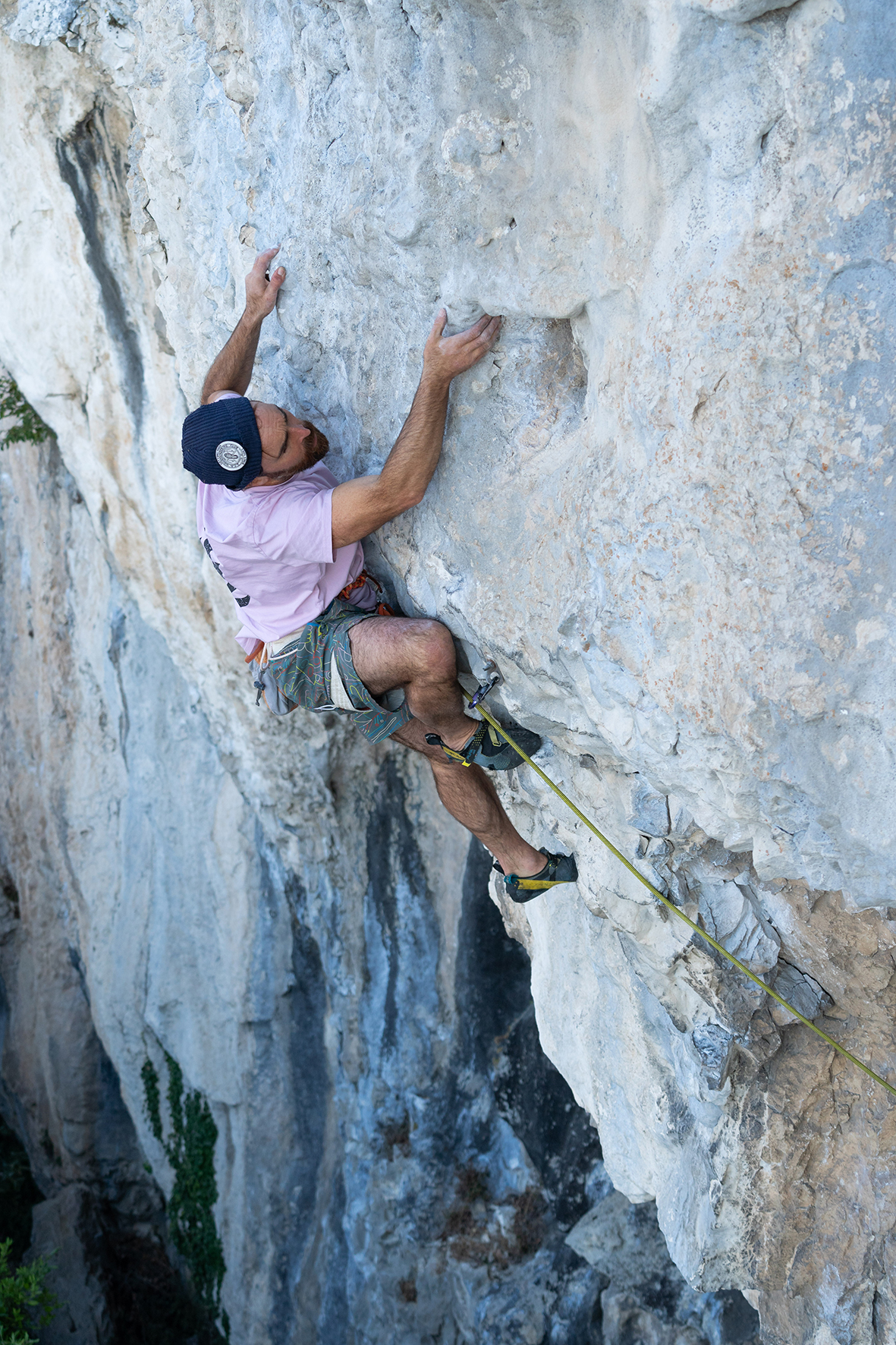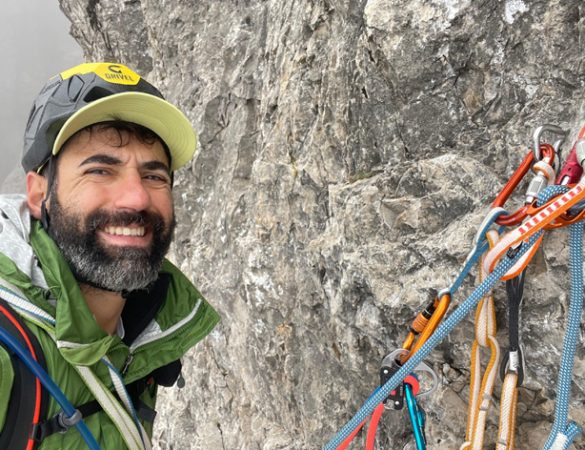




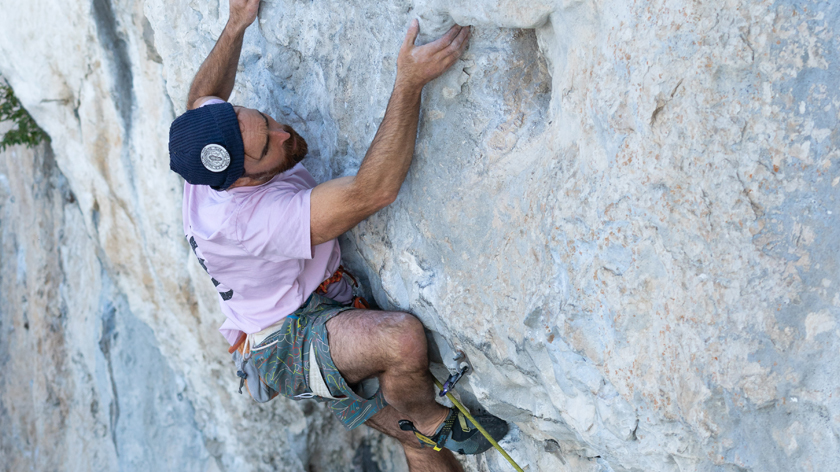
A couple of days climbing in Arco di Trento with the Patagonia, team provided the opportunity to interview one of the strongest and most versatile climbers on the planet. His Belgian/Irish heritage pushed him beyond the borders of the country where he was born and spent his adolescence, to explore the most interesting mountains and rock faces on the planet.
4Outdoor is also on Whatsapp. Just click here to subscribe to the channel and stay up to date.vv
Sean Villanueva O’Driscoll, the Interview
Let’s start with two masterpieces: the 2021 crossing of Fitz Roy in the opposite direction to what Tommy Caldwell and Alex Honnold did (but alone), and the 2024 crossing of the Torres del Paine, also alone.
You mostly share your adventures with climbing partners. What drives you to climb alone?
Yes, I usually climb with partners, so I think deciding to go it alone is linked to motivation. I feel a sort of calling, but it can also be the opportunity that influences the choice. In 2021, during the pandemic, I was in El Chalten, I was alone, and it was quite natural to decide to do that traverse that way. Last year, however, we had just climbed “Riders on the Storm” (in the Paine massif with Nico Favresse, Siebe Vanhee, and Drew Smith – editor’s note), when my partners returned, I was about to return to El Chalten too, but I saw a window of good weather and decided to give it a try. The very strong Silvia Vidal (Catalan mountaineer – editor’s note) with her solo climbs on the hardest big walls was also a great inspiration to me.
And what about safety? How much does climbing alone increase the risk?
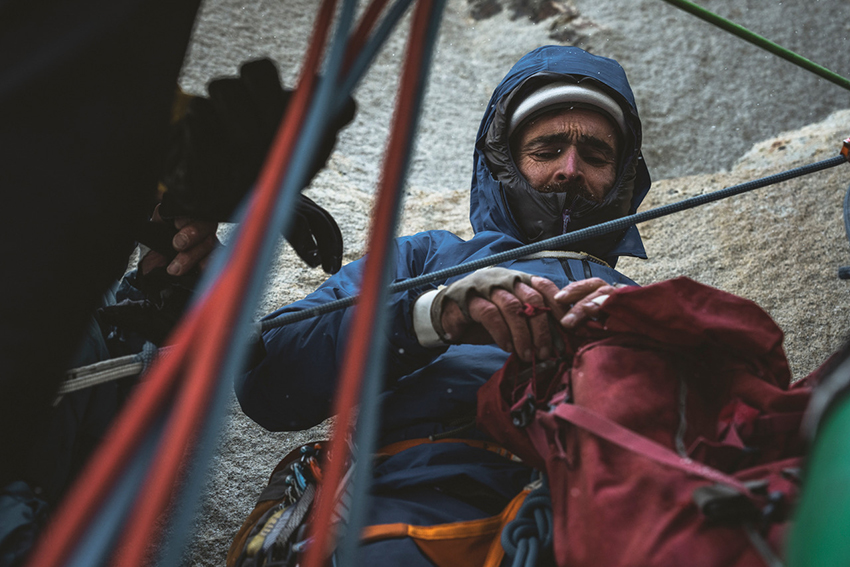
I always try to travel as safely as possible, but clearly the risk increases, especially in those remote places. If you injure a leg, for example, and you’re alone with a 10-hour approach, it becomes difficult to get to safety.
You won your first Piolet d’Or for The Devil’s Brew in Greenland, and your second in 2022 for the Moon Walk Traverse of Fitz Roy. Has the possibility of receiving these awards ever influenced your project planning?
No. Absolutely not, I’ve never thought about it, but the Piolet d’Or is a great recognition for mountaineering achievements, and it’s a great privilege to receive it, because it’s not awarded solely for the mountaineering performance but rather for the style adopted during that undertaking, and that’s what makes it important.
Let’s go back to basics. You grew up in Belgium to a Spanish father and an Irish mother. How did you start climbing?
I had a friend who climbed at a gym in Belgium, where indoor climbing is very popular, and after much persuasion he convinced me to give it a try. I was 14. I liked it, but soon I wanted to try my hand at indoor climbing too.
Did you also participate in competitions?
Yes, national level competitions.
And when and how did you get into big walls?
Very soon after I started climbing, I met Nico (my great friend Nicolas Favresse – editor’s note) and we started climbing outside.
Were you on the same level?
No, Nico was better, he’s always been really talented, he’s really strong.
We were connected right away, through this great passion, starting to train together, climbing whenever we could, dreaming of adventure and soon starting to travel, like in the south of France.
Where did your dreams come from, what inspired you?
We looked at magazines, those images made us dream, and so little by little we moved away from home and took more important trips and ventures.
And where do you find inspiration today?
Not much has changed, a photo or a friend’s story is enough, and the desire for a new adventure is born.
Indoor gym, crags, big walls, mountaineering. When it comes to ethics and/or style, the rules change in these contexts. What’s your approach?
The best thing about climbing is the variety of environments in which it can be practiced. I don’t think there’s a right or wrong context, I just think about using the cleanest style possible for where I am and what I’m doing. Whenever possible, I use portable protection, pursuing a wilder style of climbing, but that doesn’t mean I’m against sport climbing. Every type of climbing has its reason to exist, I love climbing in its entirety.
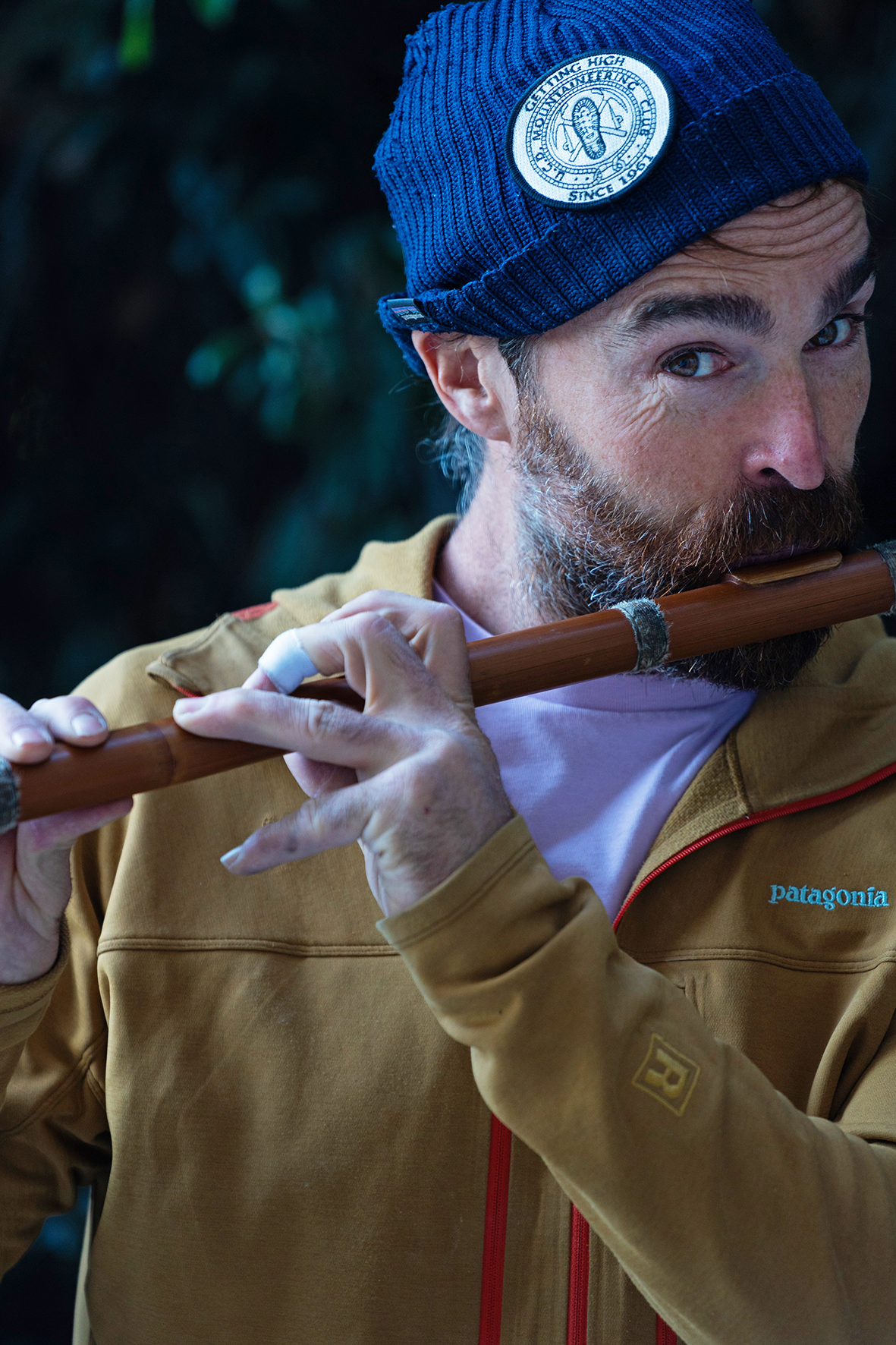
I remember a beautiful film from 2022 that saw you as the protagonist alongside your dear friend Nico: “The Dodos” in which, as often happened, you performed playing the flute.
There’s always room for musical instruments in your backpacks. What do those concerts on the rock face mean to you?
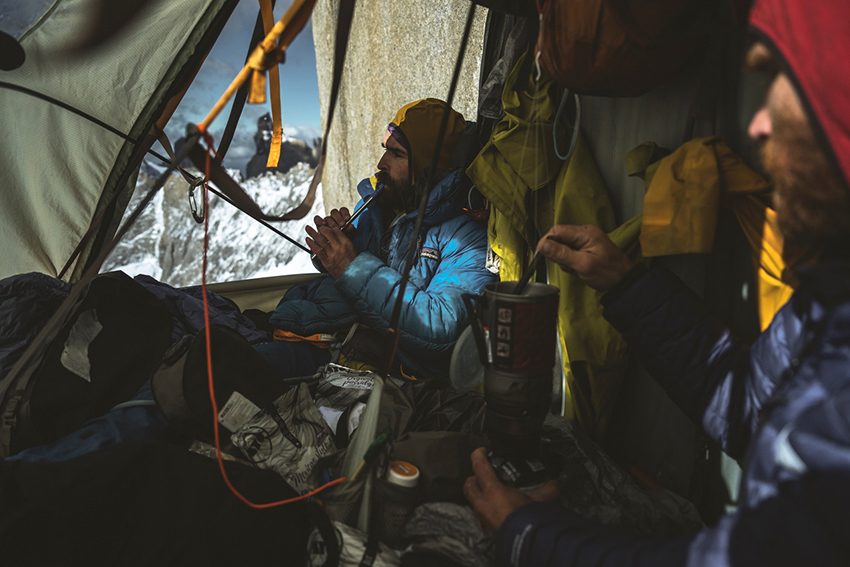
Even years ago, Nico used to carry a small guitar in his backpack, so I started bringing my flute. So we started carrying instruments with us on Big Walls. For us, it’s a celebration of the joy of living, it helps us pass the time happily and keeps us motivated when the weather turns bad and we have to wait. Music is training, it’s learning, it’s creativity. Music gives us energy. And the second motivation is that on Big Walls, when we’re engaged in something difficult and everything seems complex, music allows us to feel the moment, it lightens the atmosphere, the soul, it’s a light in the darkness of fear, and everything becomes possible.