



The transitional seasons have become the best time to enjoy the outdoors, and autumn—with its incredible colors—offers a truly unique experience. Not long ago, summers were so pleasant that few people felt the urge to visit the mountains in the months that followed; perhaps the growing popularity of the term “foliage” has helped open our eyes to a possibility that, in truth, has always been there, just waiting to be embraced.
4Outdoor is also on Whatsapp. Just click here to subscribe to the channel and stay up to date.
Returning to walk in the mountains, together
For the past few years, heading into the mountains has become, for me, above all an opportunity to share experiences—not only with my partner, but also with our trusty four-legged companion, Roger. I have always loved hiking along high-altitude trails, but doing so in the company of those who appreciate nature, good company, and physical activity just as much as—or even more than—I do, brings me truly great joy.
While last summer we had enjoyed three days of trekking along the Alta Via del Monte Baldo, this July an accident left Roger paralyzed, requiring two months of rehabilitation therapy and forcing us all to observe a period of complete rest.
It is therefore understandable that, once the alarm had largely subsided, there was a very strong desire to get back on the road.
We didn’t know how much stamina our Australian Shepherd would have—after all, he still struggles with stairs and quite often loses his balance—so we needed to choose a suitable route: one not too far from home, with minimal elevation gain, and of a modest duration.
Milan’s location offers a wide range of trekking destinations; while nothing is extremely close, many options are within easy reach—and the Orobie Alps are certainly a great choice.
Admittedly, the days in late October are no longer very long, and temperatures drop sharply once the sun goes down; but if B&Bs and mountain huts are rarely still open, and spending a night in a tent might entail some hardships, what other options remain?
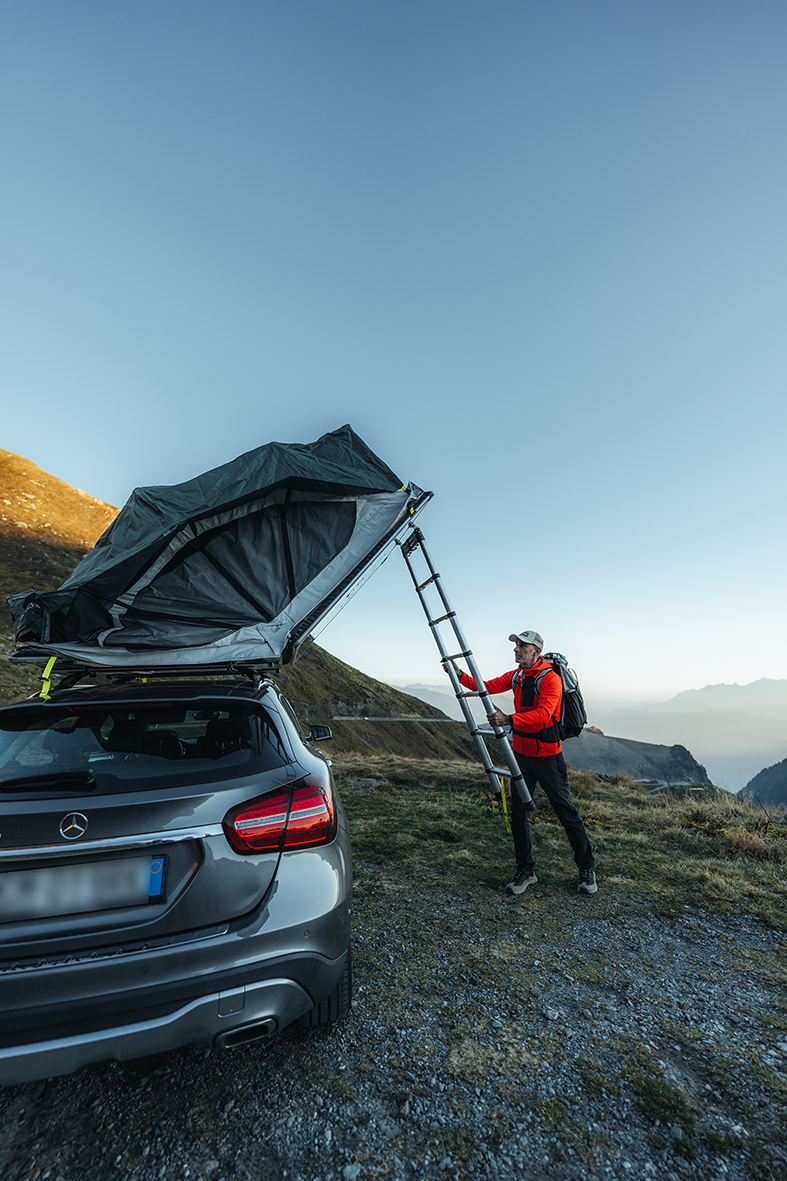
You know those tents that you set up on the roof of a car? Well, that would have been a great option.
But wait a minute—since we didn’t have one, how could we have done it?
But, surprise!, you don’t have to buy one—Decathlon offers them for rent. So why not take advantage of that?
Roof racks for the car, the bare essentials for camping, a couple of backpacks—and off we go, heading for Passo San Marco, with a quick stop at the store in Lissone along the way.
Discovering the San Marco Pass in the Orobie Alps
Cyclist and motorcyclist friends had been telling me about it for years, but even though I’ve spent time in the valleys around Bergamo, in Valtellina, and in the area near Lecco, I had never happened to pass through there.
A real shame—I can say that now.
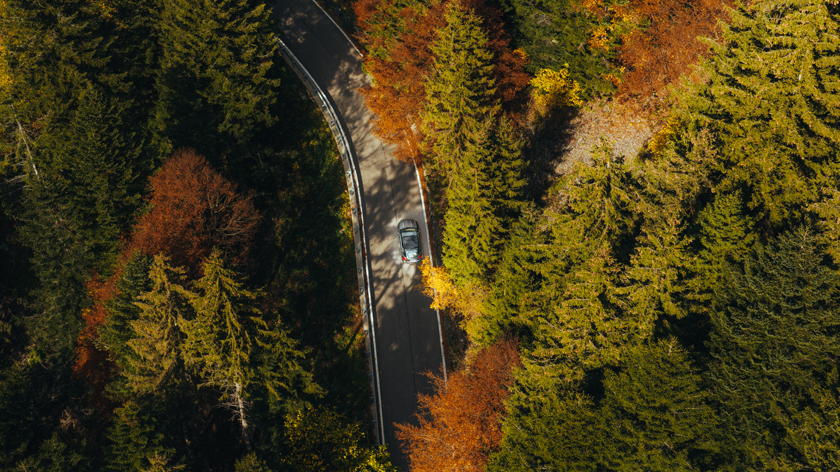
After traveling through the Brembana Valley, you reach Olmo al Brembo, where the road begins its ascent toward the mountain pass. The woods are a true palette of color, with green gradually giving way to shades of yellow, orange, and red, while the first rocky cliff faces begin to emerge a little higher up. As you climb, the built-up areas fade into the natural landscape, and the trees eventually yield to pastures where, in the right season, goats and dairy cows graze freely. After all, Taleggio cheese—along with other local delicacies—originated right here in these mountains.
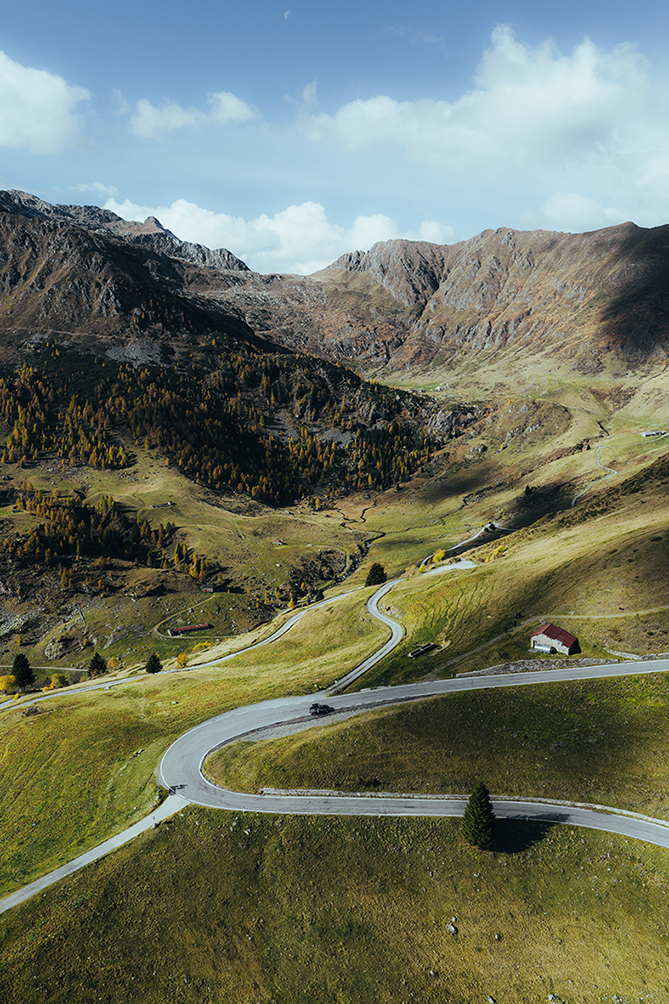
We climb, we climb, and—wow—the San Marco Pass reaches an impressive 1,990 m!
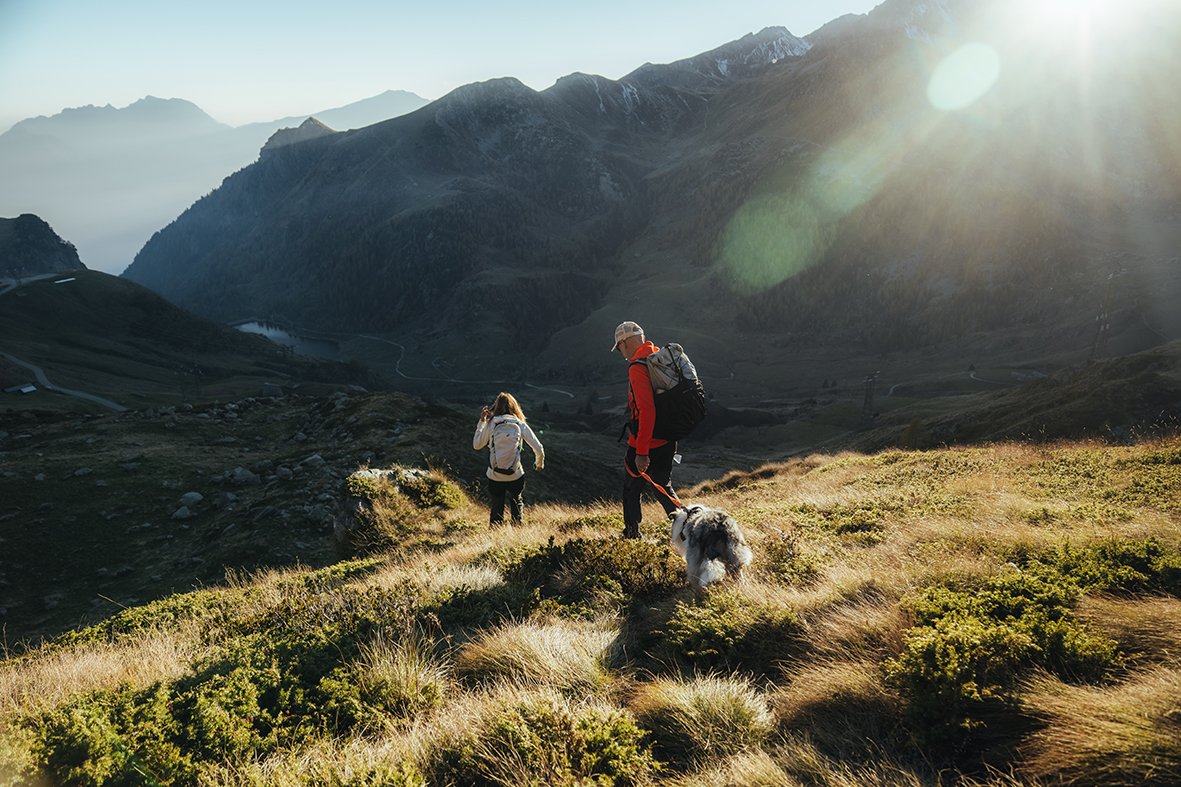
The view sweeps 360 degrees across the surrounding peaks, and the beautiful day allows us to enjoy the best of panoramas.
We retrace our steps for a couple of kilometers; the starting point for our hike is near the San Marco roadman’s house (Casa Cantoniera).
In July and August, you’ll certainly have to fight for a parking spot, but at this time of year—aside from the occasional camper or biker (motorized or otherwise)—there’s plenty of space.
Autumn trek towards the Verrobbio Pass
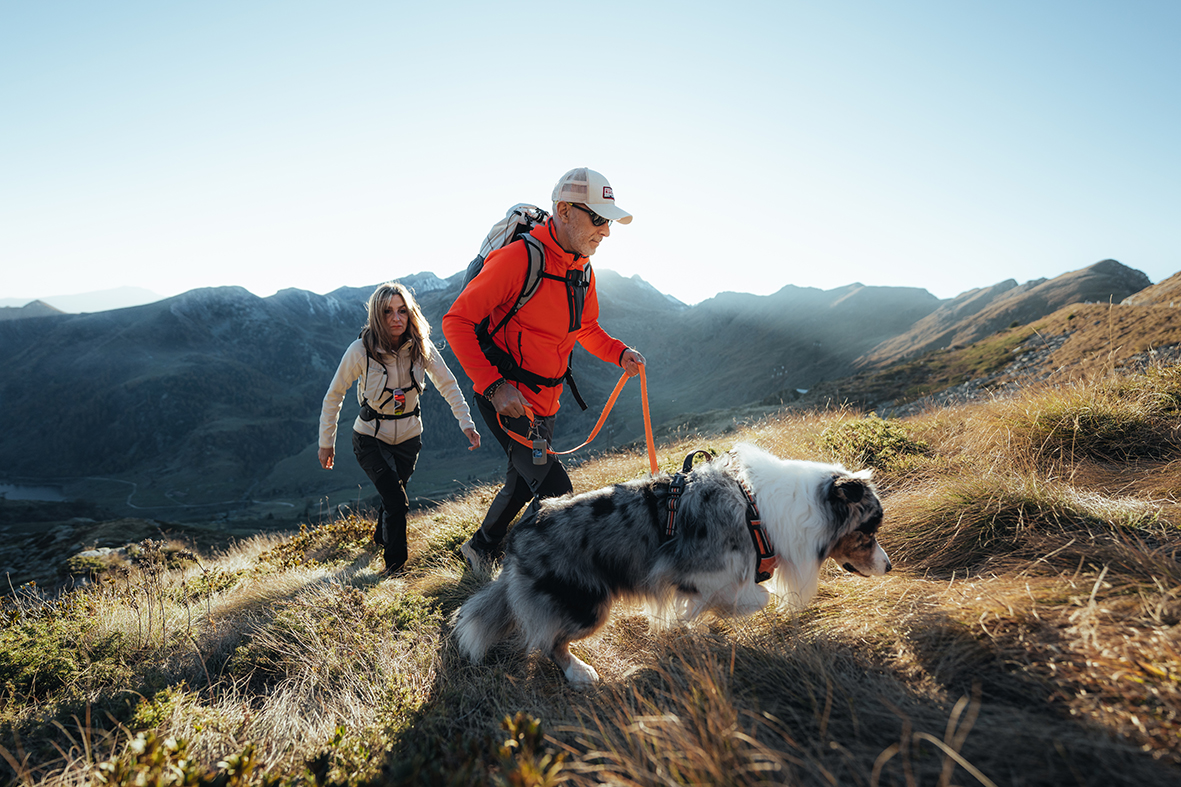
Off we go, then—backpacks on, it’s time to start walking. From the starting point, you can already see the first stretch of the trail, which winds along the hillside in a wide, westward-facing arc. The terrain isn’t difficult, and for the first time in months, Roger is bounding along happily—skipping over stones, patches of earth, and small stream crossings. His tail wags incessantly, and whenever we pause, he barks to urge us onward.
The morning sun is obscured by high clouds and the temperature suddenly plummets—something that happens often in the mountains, and even more so at this time of year. Then, all of a sudden: “Hey, are those snowflakes? Better put on a shell layer before my muscles get cold.”
Sleet falls while the sun shines on the horizon—you certainly can’t say it’s boring.
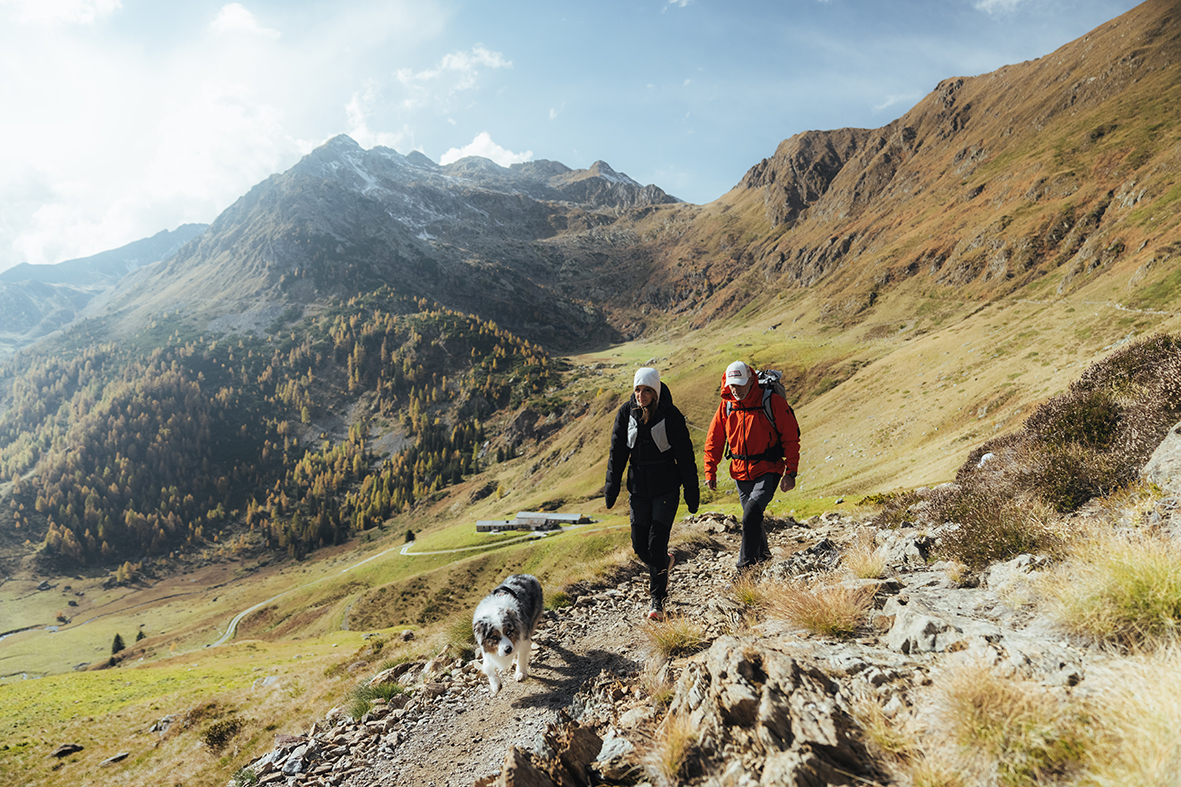
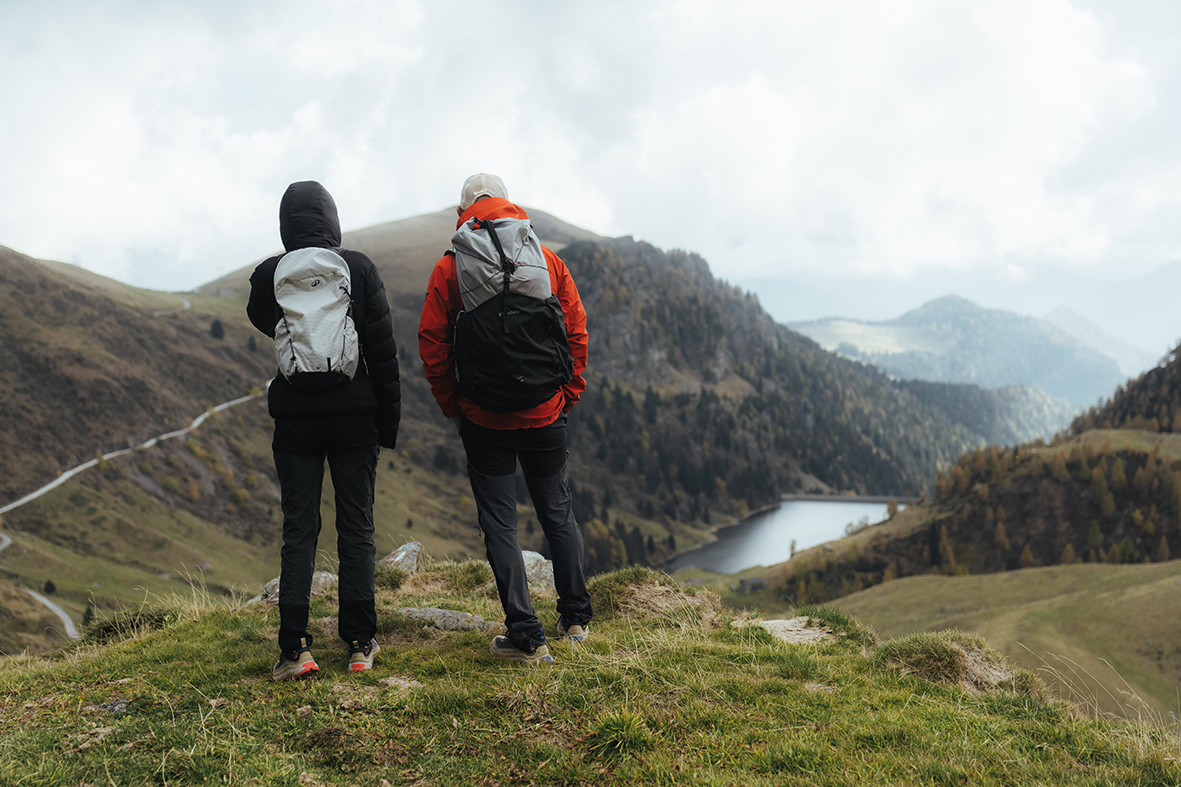
The slopes of Monte Ponteranica Orientale conceal the Valmora artificial reservoir from view, and before reaching the Verrobbio Pass—our destination—we come across defensive trenches that are part of the Cadorna Line.
At the mountain pass, the view opens up onto a new slope, and if we had more time—and were certain we had the necessary endurance—we could continue much further.
Five kilometers is enough for today; before it gets dark, we need to set up our “little house” and get ready for the night.
A night in the mountains under the stars
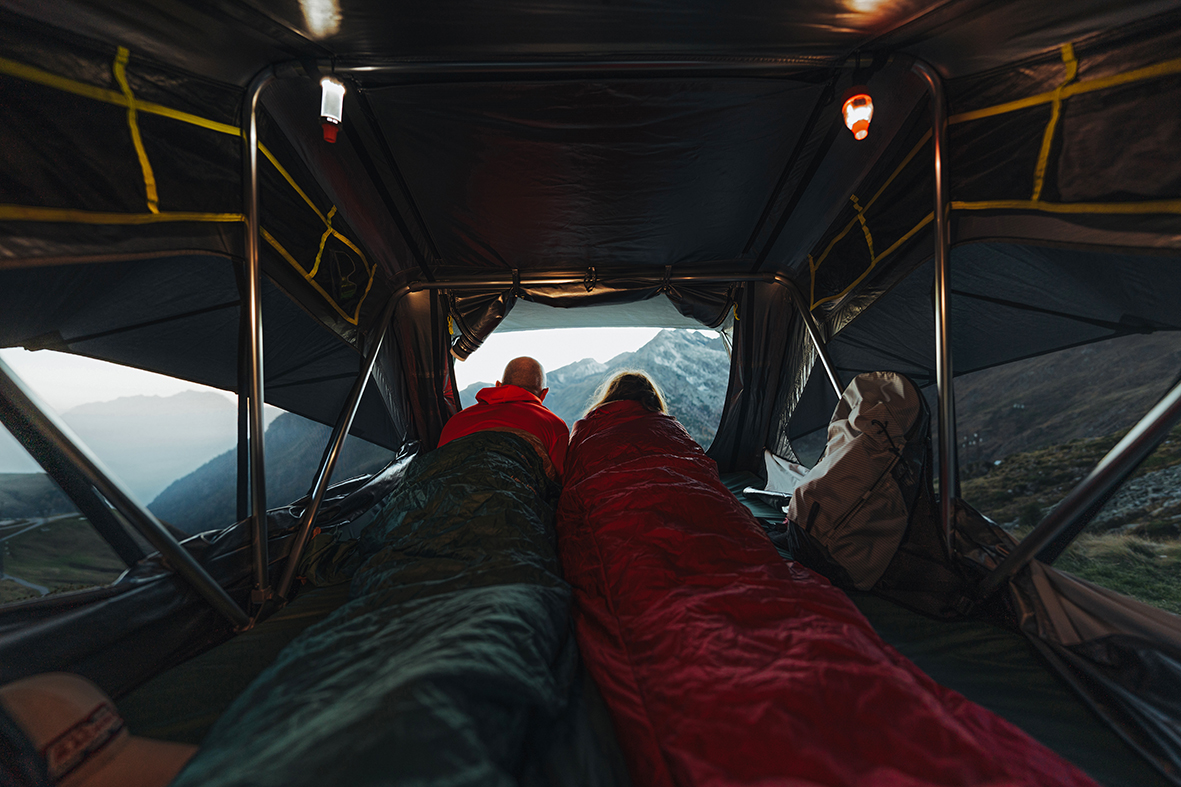
It is nearly sunset when we reach the car; the sky has cleared, and sooner than we expected, we manage to set up our tent and tuck our sleeping bags and a few kitchen items inside.
Could there be a better place to have an aperitif and enjoy dinner?
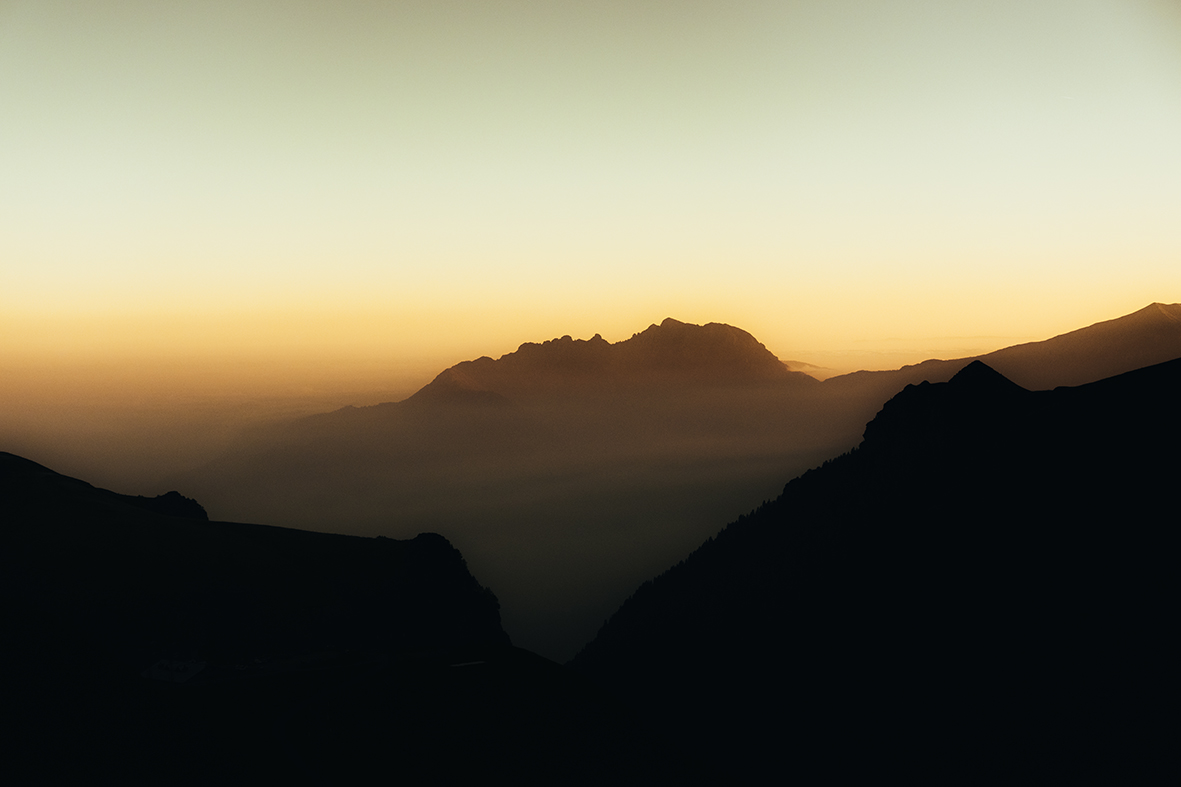
The last rays of sunlight reach us from behind the peaks; all around, there is absolute peace. We are just a stone’s throw from home, yet it feels as though we are 10,000 kilometers away—with this small canvas roof above our heads and a sky full of stars overhead. Tonight, this will be our home.